








The Seventh Senedd marks a pivotal moment for both nature and climate action, with domestic and global targets fast approaching. How will the new Welsh Government tackle key environmental challenges?
In 2019, the Welsh Government declared a ‘climate emergency’. Two years later, the Senedd declared a ‘nature emergency’. These statements acknowledged the role of human activity in causing climate change and biodiversity loss. Both present complex, multi-dimensional risks to human health and wellbeing.
These two emergencies are related. Climate change threatens to worsen nature loss, but restoring natural ecosystems can both store carbon and improve climate resilience.
However, climate and nature also require distinct consideration. For example, renewable energy developments could negatively impact local biodiversity.
While Wales’ legal climate mitigation framework has been in place for a decade, the biodiversity agenda hasn’t received the same political attention with legislation to introduce nature targets only passing earlier this year.
Key nature and climate decisions must be taken over the next four years.
The nature emergency
Biodiversity is at risk
Some scientists say we are entering the sixth mass extinction event in the Earth’s history, and the first linked to human activity.
Wales is ranked 224 out of 240 countries on the Biodiversity Intactness Index, putting it in the bottom 10%.
Of 3,897 species that have been assessed using International Union for Conservation of Nature (IUCN) Red List criteria, 18% are threatened with extinction from Wales, including the fen orchid, water vole and sand lizard.
Species in Wales threatened with extinction
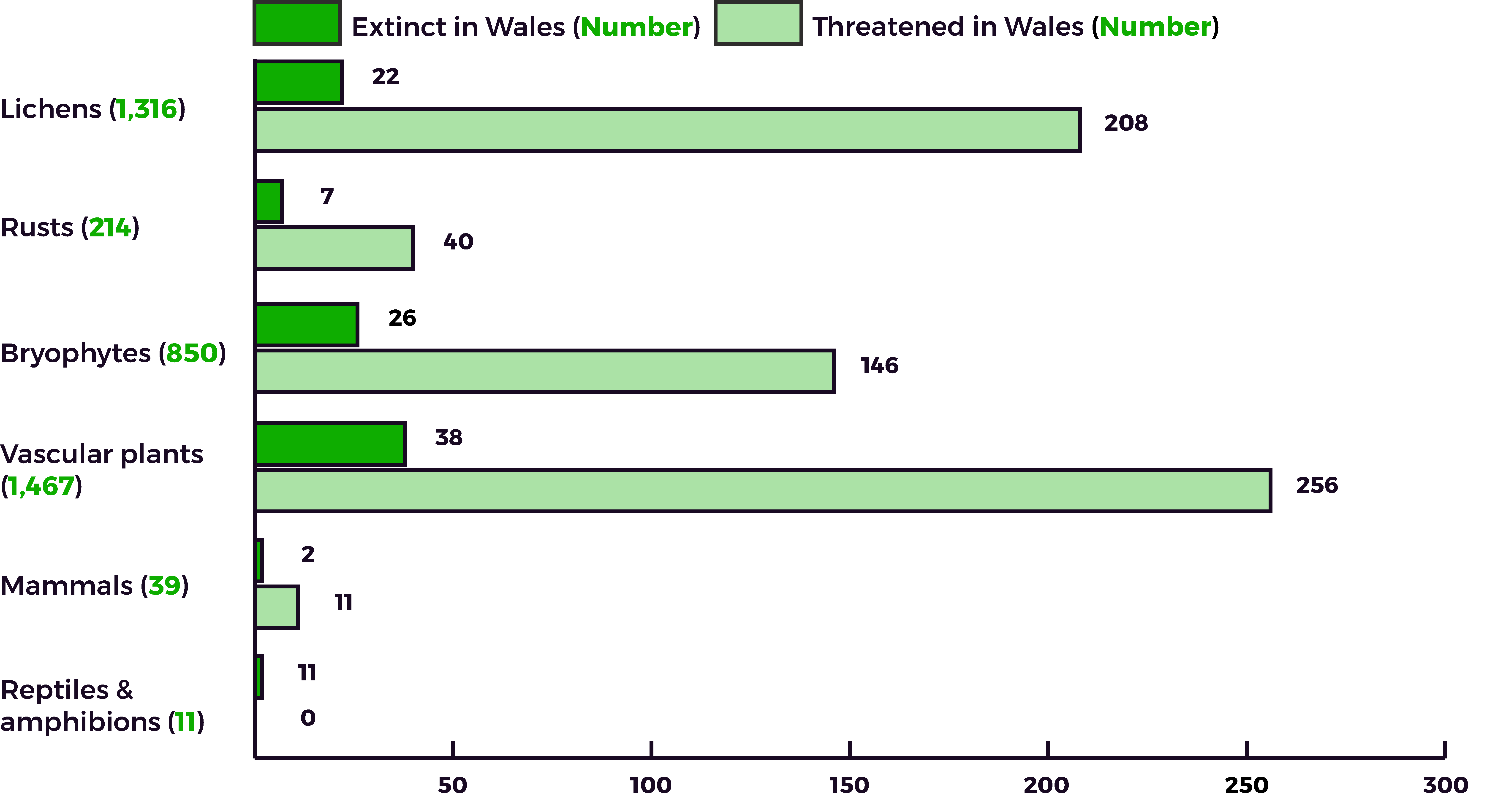
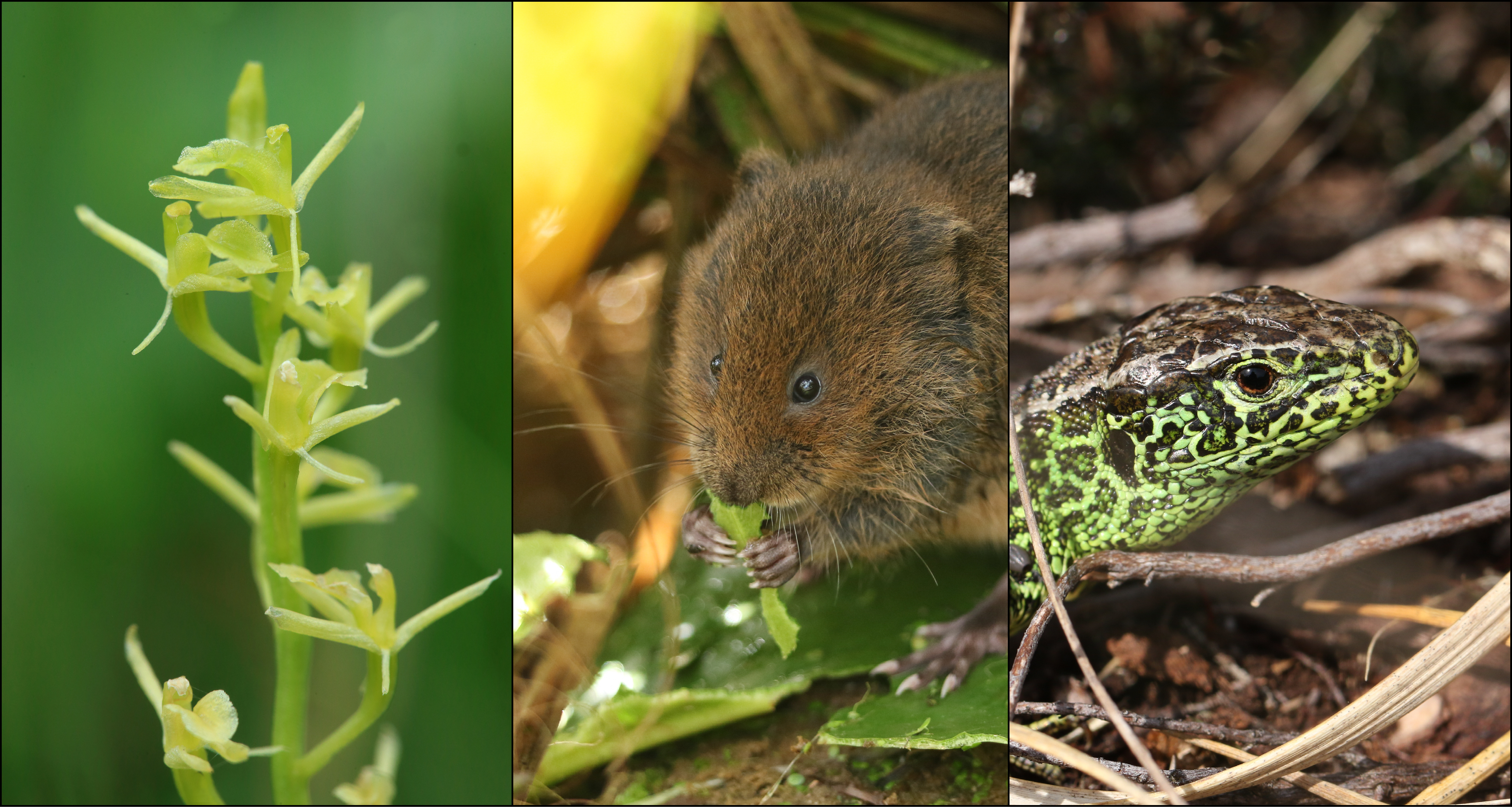
Source: State of Nature 2023, Wales report (using Wales-specific) IUCN Red List assessments showing assessed species in ‘Red List’ categories, by broad taxonomic group. The numbers in brackets are the number of assessments. ‘Threatened’ = IUCN Red List criteria ‘Critically endangered’, ‘Endangered’ or ‘Vulnerable’. The photographs show the fen orchid, water vole and sand lizard which are species threatened with extinction. ‘Extinction’ relates to ‘modern extinctions’ i.e. species described by science rather than all extinctions in Earth’s history.
Pressures on biodiversity include pollution, climate change, certain agricultural and woodland management techniques, urbanisation, overexploitation and invasive non-native species.
There is growing international recognition of the critical value of nature for people’s health and wellbeing, for example by providing food and clean water, and preventing flooding.
A global commitment to halt biodiversity loss by 2030
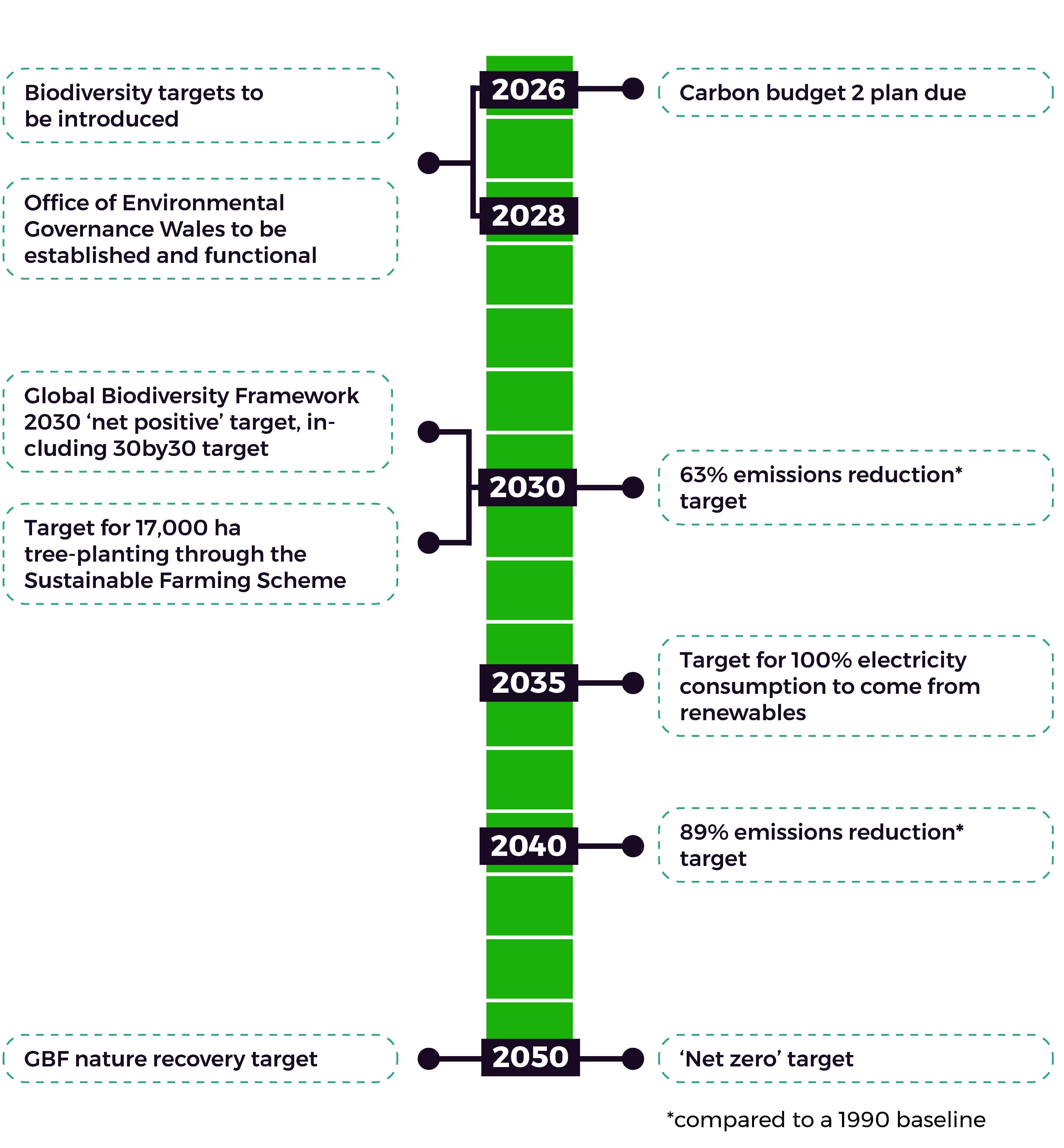
In 2022, the UK signed up to the Global Biodiversity Framework (at COP15) to halt and reverse the loss of nature by 2030 and achieve recovery by 2050. A high profile ambition of the framework is to protect 30% of land, freshwater and sea for nature by 2030 (known as ‘30by30’).
The Global Biodiversity Framework ambition to halt and reverse the loss of nature by 2030 and achieve recovery by 2050.
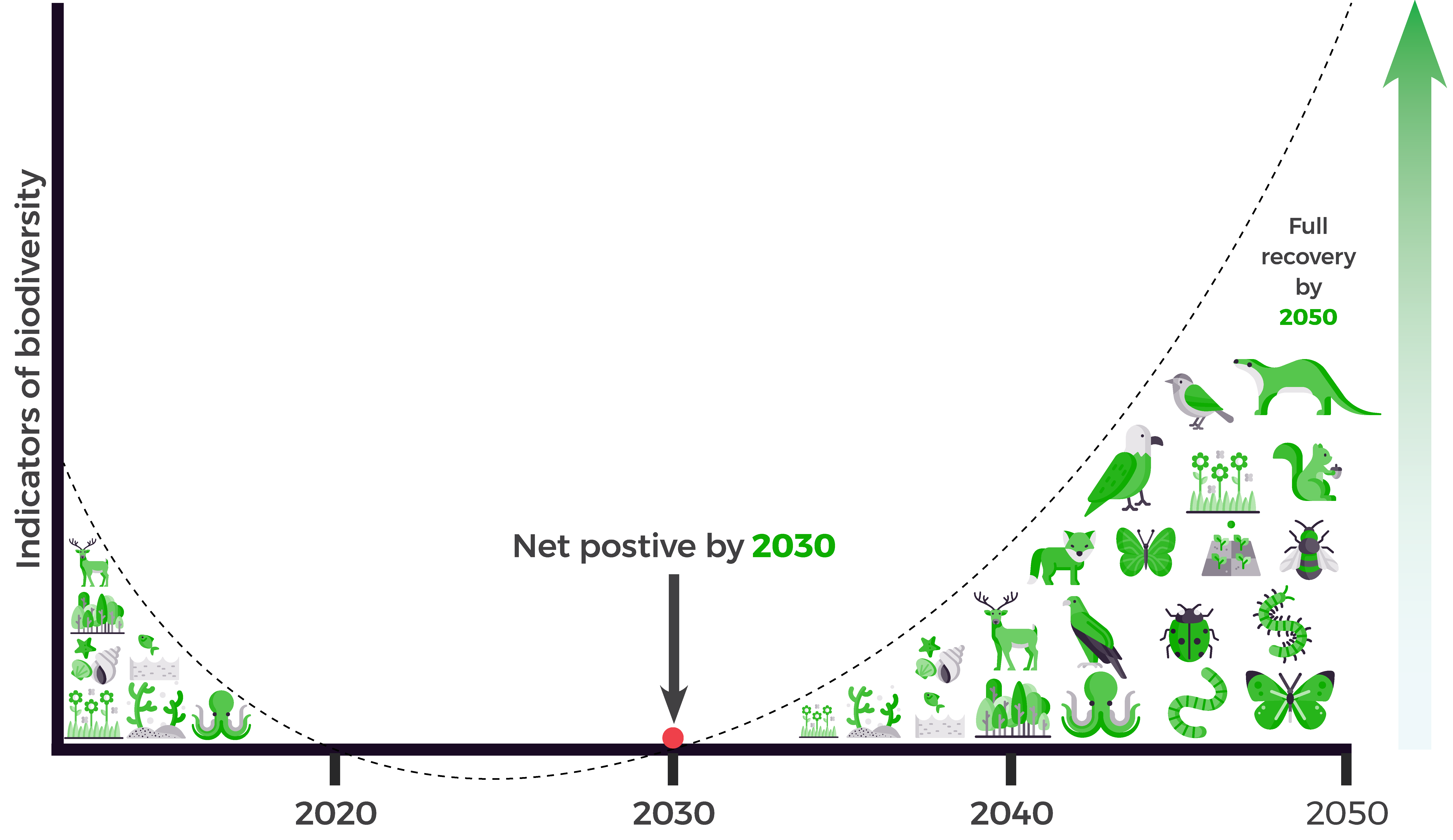
Source: adapted from naturepositive.org
As a devolved area the Welsh Government has a role to play, with the previous government carrying out a ‘biodiversity deep dive’ and developing a framework to achieving 30by30. The Seventh Senedd will mark a pivotal moment as it’ll fall to the new Welsh Government as to whether Wales reaches its 2030 commitment to halt the loss of biodiversity.
It’s a tall order. The environment sector’s 2025 UK-wide progress report suggests that Wales currently has just 2.14% of land meeting the 30by30 criteria.
Progress towards the 30by30 target on land across the UK.
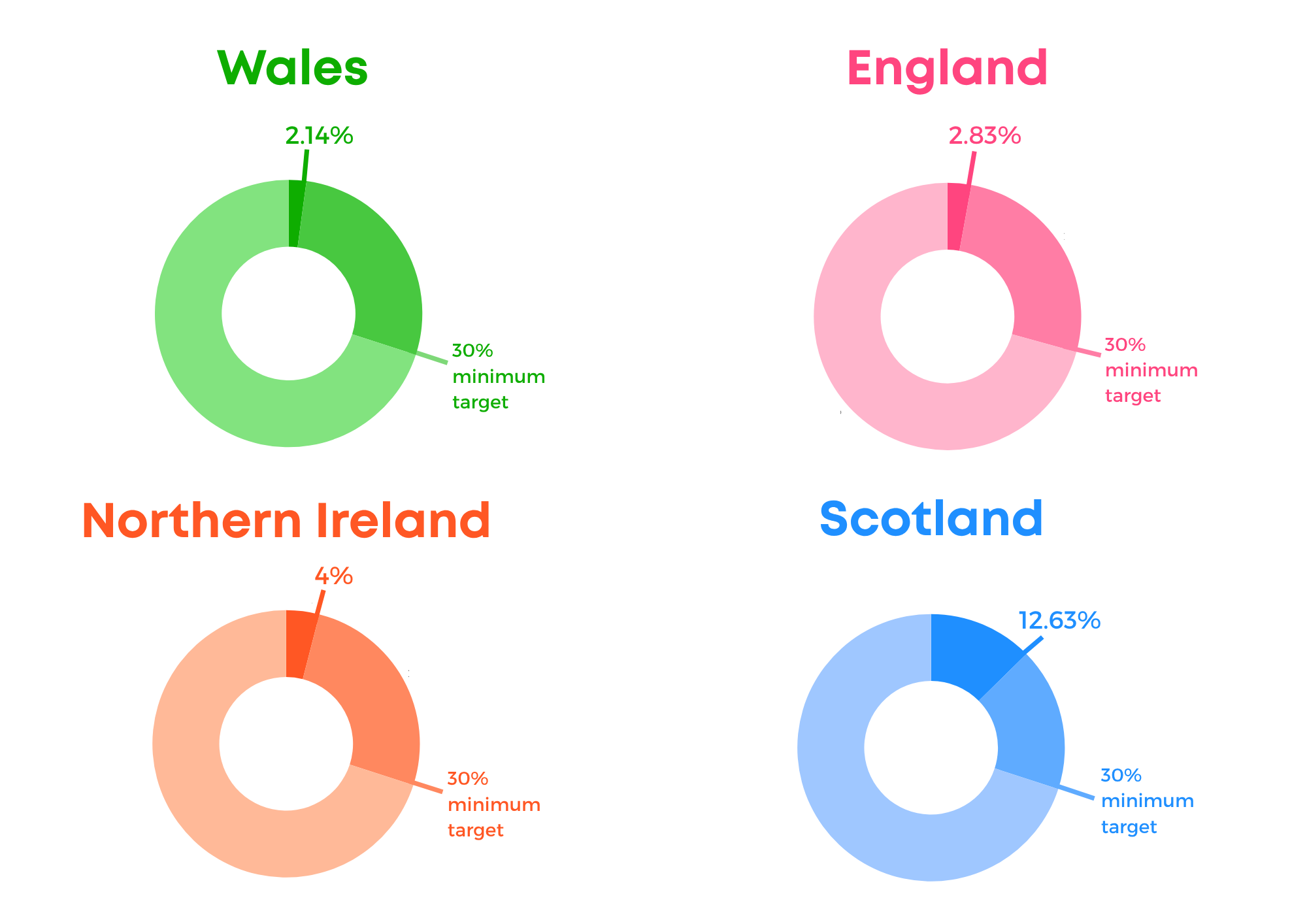
Source: 30by30, 2025 UK Progress Report, Wildlife and Countryside Link
How might the Welsh Government tackle the nature emergency?
Biodiversity targets - The new Welsh Government will be required to introduce statutory domestic biodiversity targets for the first time, to drive action and improve accountability. The targets, framed around extinction risk, ecosystem management, pollution and data, must be introduced via regulations by April 2028, allowing the Senedd to have its say.
Protected sites - Experts say, to reach the 30by30 target, protected areas for nature must be “better, bigger, and more effectively connected”. There will be pressure on the new government to improve marine protections through improved designation, management and monitoring.
Agriculture - Over 80% of land in Wales is under agricultural management and so environmentalists are looking to the Sustainable Farming Scheme (SFS) as a key mechanism to restore biodiversity. Eyes will be on the ambition for at least 17,000 hectares of new trees to be planted under SFS incentives by 2030.
Pollution - Tackling pollution into watercourses from agriculture and sewage were high profile issues in the last Senedd that will no doubt re-surface.
The climate emergency
The Welsh climate is changing. Wales’ three hottest years on record all occurred during the Sixth Senedd. Long-term forecasts say this warming will continue, bringing wetter winters, hotter, drier summers, and rising sea levels. A changing climate threatens health, infrastructure, and the natural environment.
Wales’ average temperature anomaly since 1884 compared to the 1961-1990 average
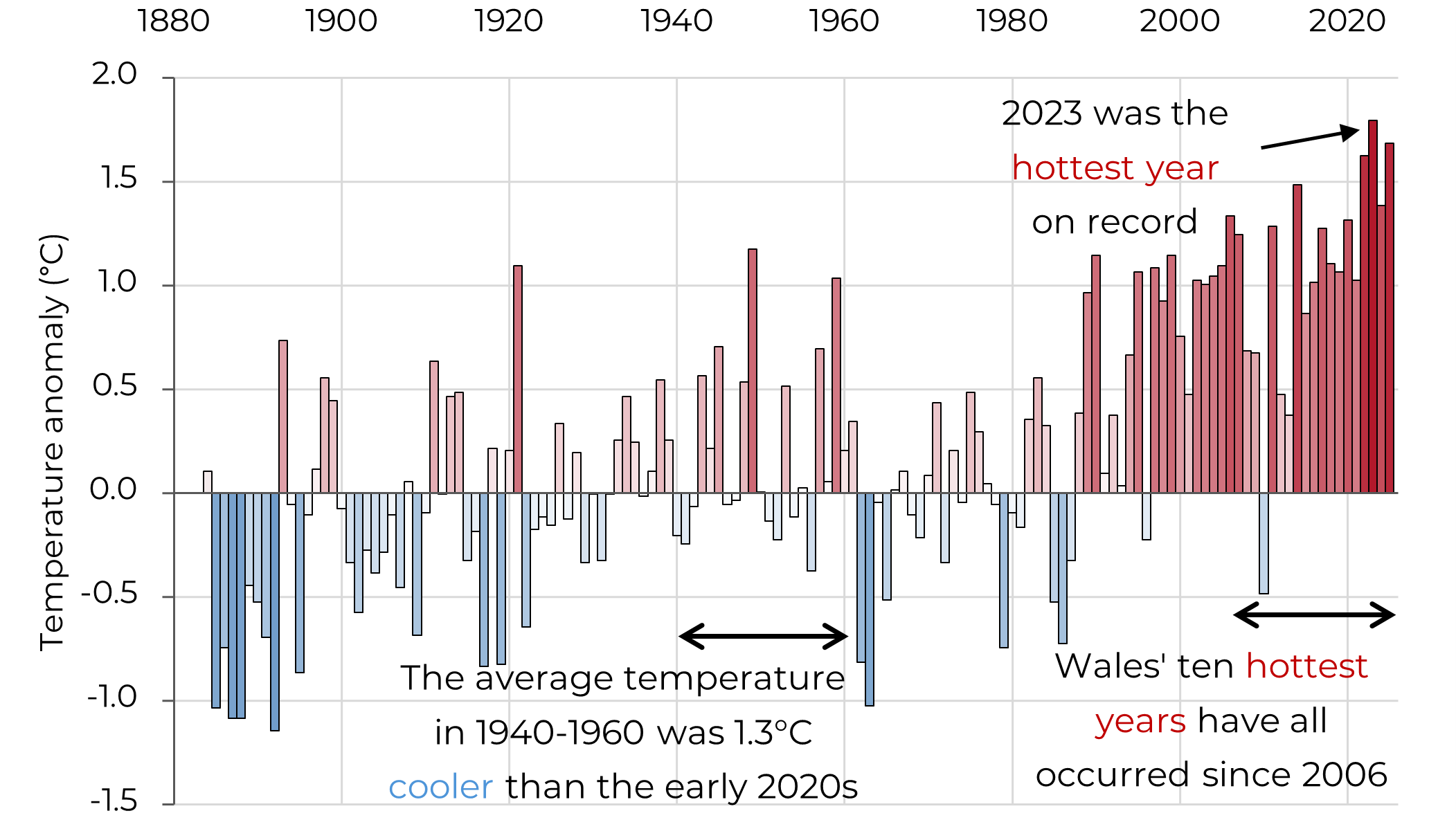
Source: Senedd Research analysis of Met Office data
Net zero gets heated
Climate change is overwhelmingly driven by manmade greenhouse gas emissions. In 2021, the Senedd unanimously agreed that Wales should stop contributing to climate change by achieving ‘net zero’ greenhouse gas emissions by 2050.
Fractures have since emerged in that political consensus. Although only 14% of the public oppose Welsh Government climate action, specific approaches have proven controversial: farmers protested SFS tree-planting proposals in 2024; and local groups have opposed energy infrastructure like wind turbines, solar farms, and pylons.
Decarbonisation is on track – for now
Wales’ current decarbonisation pathway includes 10-year targets and 5-year ‘carbon budgets’. Emissions fell by 38% between 1990 and 2023, and all emissions targets and carbon budgets to-date have been achieved.
Welsh emissions, targets, and carbon budgets 1990-2050
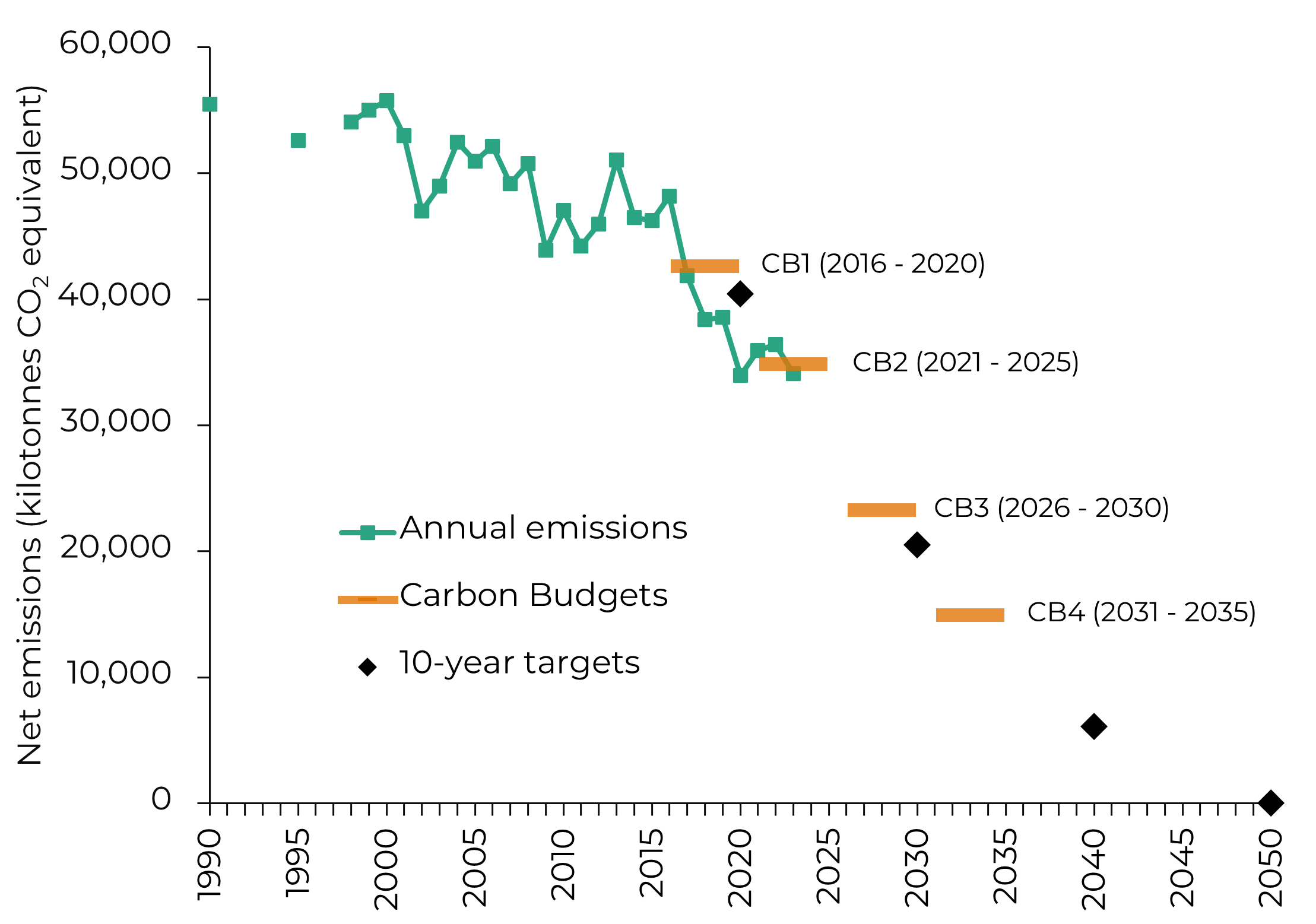
Source: UK National Atmospheric Emissions Inventory (NAEI), Welsh Government
The majority of this reduction has come from sectors that remain mostly reserved to Westminster – electricity, fuel supply, and industry – where Welsh Government influence is largely limited to the planning system.
Slightly under half of emissions come from sectors that are mostly devolved to the Senedd.
Total Welsh emissions in 2023 by sector
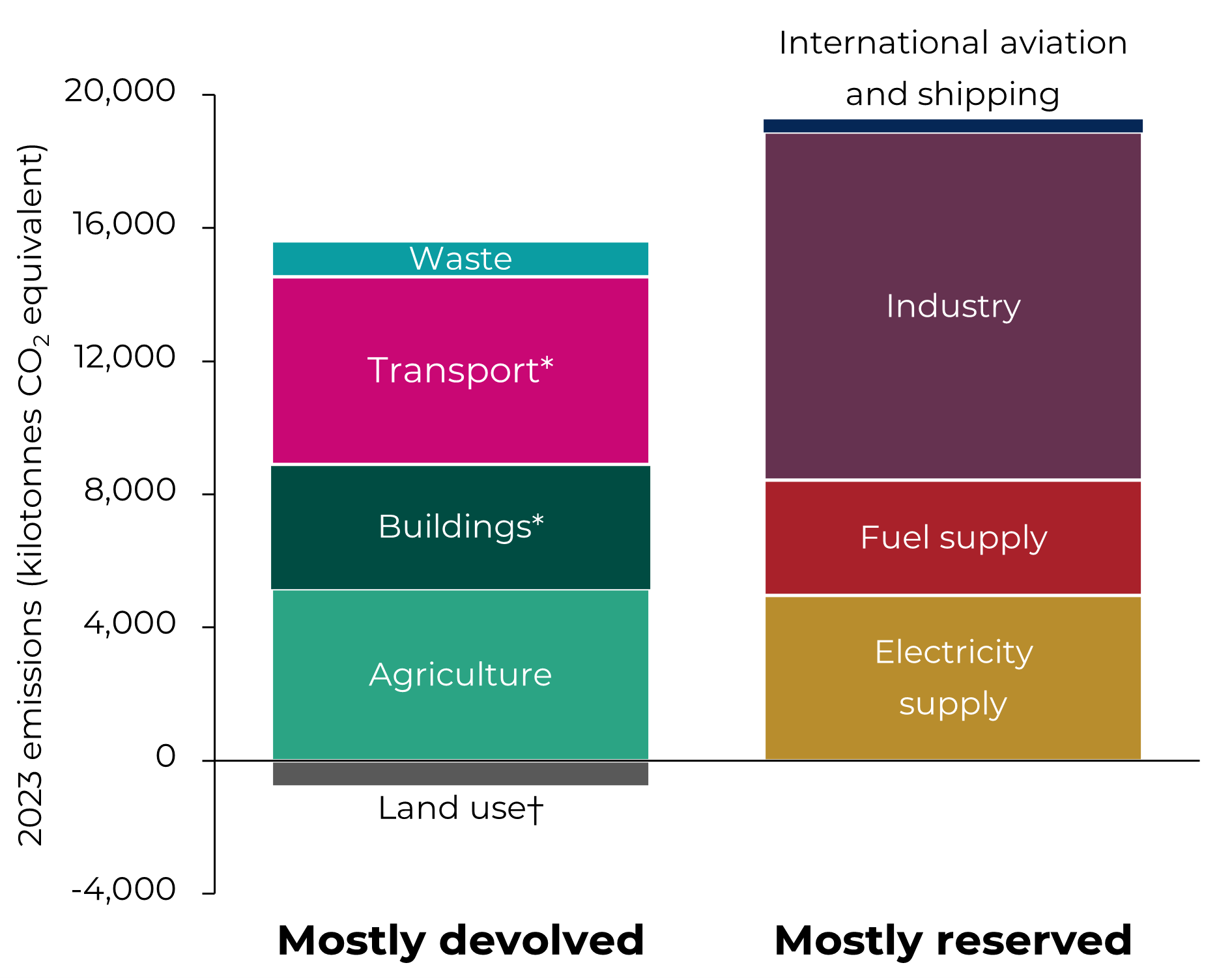
*The UK Climate Change Committee classifies ‘Surface transport’ and ‘Buildings’ as ‘partially devolved’.
†’Land use’, such as forestry and peatland, absorbs more greenhouse gases than it emits. Therefore this sector’s ‘emissions’ are negative.
Source: Senedd Research analysis of NAEI data
Carbon budget options and opportunities
Under existing law, the new Welsh Government has until the end of this year to set out its plans for reducing emissions up to 2030, to achieve Carbon Budget 3.
The independent Climate Change Committee (CCC), the statutory climate advisor, recently suggested how the Welsh Government might make progress in devolved sectors – summarised in a Senedd Research article and the table below.
How could the new Welsh Government reduce emissions?
|
‘Mostly devolved’ sector |
CCC ‘Balanced Pathway’ scenario |
|
|
Transport |
16% |
Uptake of electric vehicles More journeys by public transport and active travel |
|
Agriculture |
15% |
Reducing fertiliser emissions Electrified farm machinery Fewer cattle and sheep |
|
Buildings |
11% |
Adoption of heat pumps |
|
Waste |
3% |
Reduce waste production Deploy carbon capture and storage at Energy from Waste plants |
|
Land use |
N/A – a net sink of CO2 |
Source: NAEI, CCC
The new Welsh Government could take inspiration from the Net Zero 2035 Challenge Group, and the last government’s scene-setting work.
Mitigation presents opportunities, not just challenges. Green jobs are growing and are better paid than average; better air quality improves public health; electric vehicles are cheaper to run; and carbon-storing habitats can help nature recovery.
However, the green transition will negatively impact some emissionsintensive sectors: see Port Talbot’s now-closed blast furnaces. The last Welsh Government made a case for a ‘just transition’, but the CCC argues governments “should be bolder in intervening to mitigate adverse impacts where the private sector alone is unable to do so”.
Adapting to a new normal
There is a pressing need to adapt to the impacts of climate change, regardless of how quickly emissions fall. Impacts range from the proliferation of diseases like bluetongue, to dangerous overheating in people’s homes. Winter storms are becoming more intense, making a repeat of storms Bert, Darragh, and Claudia more likely, and increasing flood risk.
Estimated flood risk to Welsh properties in 2025 and 2120
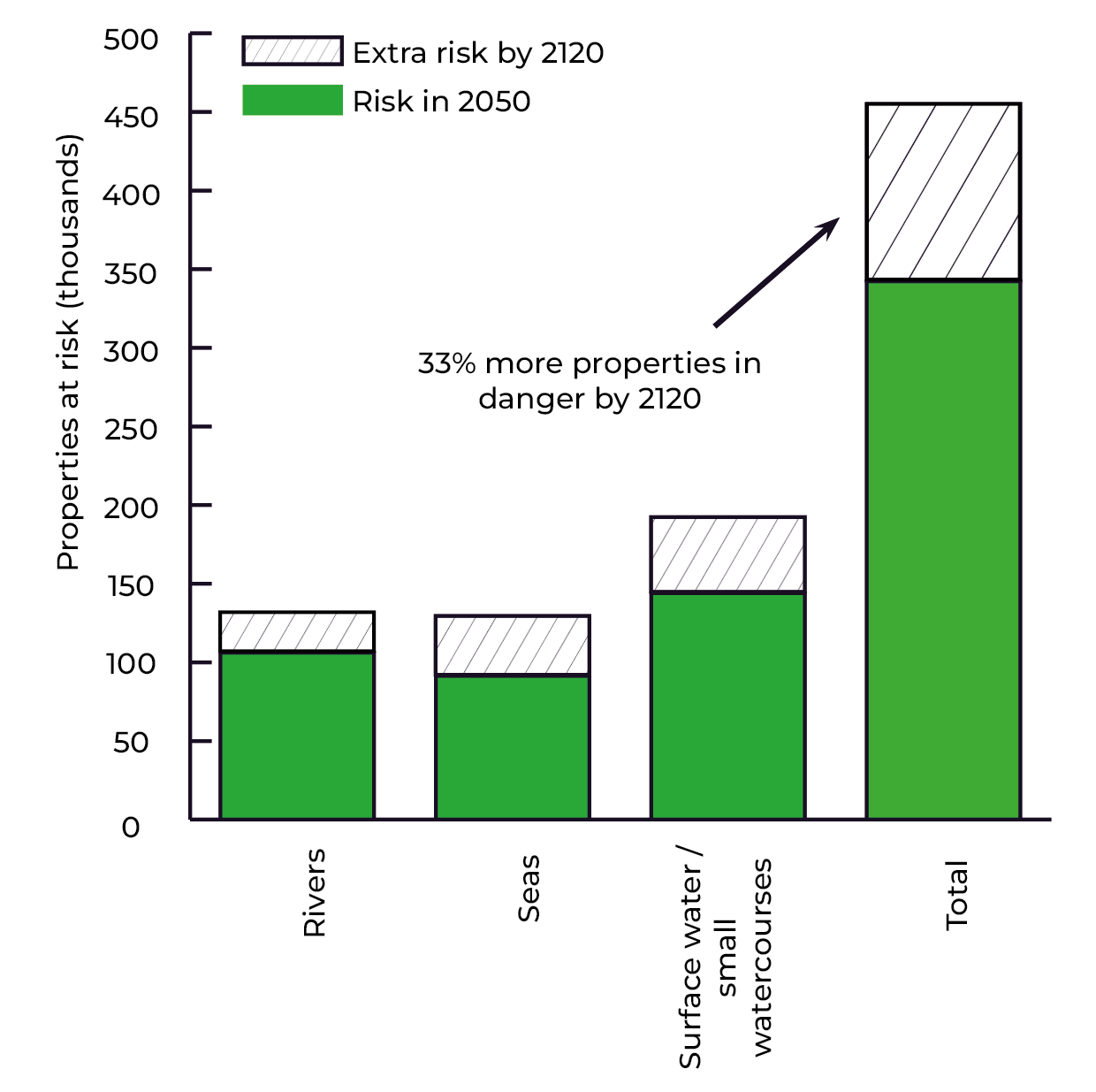
Source: Natural Resources Wales
The National Infrastructure Commission for Wales – which assesses long-term infrastructure needs – has proposed greater urgency and a stronger legal foundation for adaptation.
Nature-based approaches to adaptation like seagrass meadow restoration and urban tree planting offer policymakers options to simultaneously reduce climate risks and support biodiversity.
Expected developments on nature and climate action
Underpinning success
The environment sector argues that climate and nature goals are unlikely to be delivered without adequate and sustained funding. In recognition of the scale of the task, there is increasing focus from environmentalists and governments on mechanisms to lever sustainable private investment to augment public funding.
Long-anticipated by stakeholders – the Office of Environmental Governance Wales is due to be set up in the Seventh Senedd. Its independence and funding will be key considerations, given its intended role to improve the implementation of environmental law and hold public bodies to account on nature and climate commitments.
Nature loss and climate change impact many areas of Welsh Government responsibility. Integrating environmental considerations across government is now a legal requirement. Environmental stakeholders will expect an embedded, whole-government response to the nature and climate emergencies during the Seventh Senedd.
Article by Dr Katy Orford and Dr Matthew Sutton, Senedd Research, Welsh Parliament