








Priorities for rural land use are likely to be a policy battleground. Farming, conservation, forestry, public access and energy generation are just some of the issues policymakers will need to address in the Seventh Senedd.
Wales is a land of dramatic mountains, deep valleys, and green rolling hills.
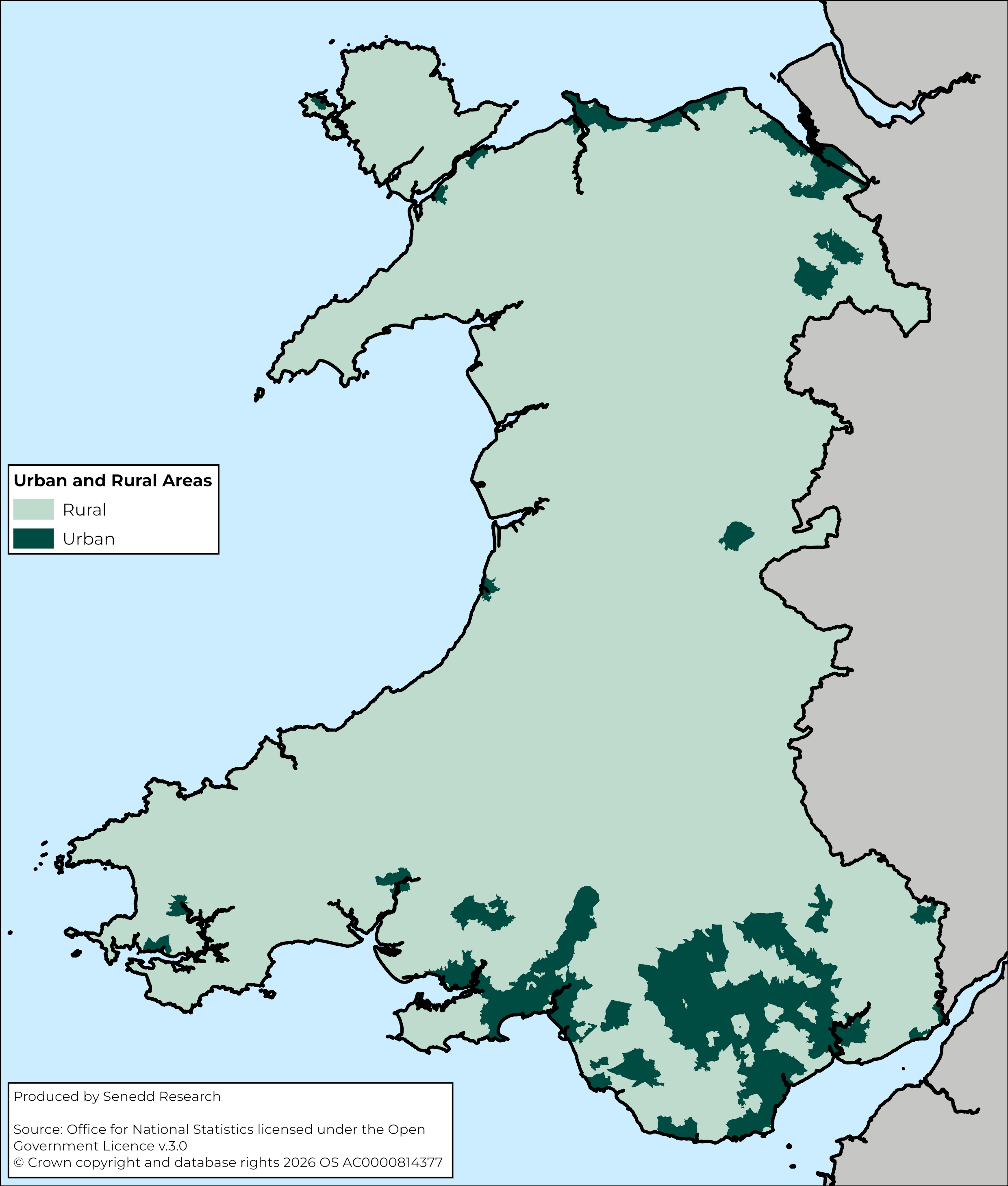
This overwhelmingly rural landscape has helped shape how the world sees us, and how we see ourselves. But most of us live in towns and cities, and urban electorates have largely urban priorities.
Government policies on how we use our rural land have a profound impact on those who live and work in the countryside, but who make up a small proportion of voters.
While the previous Welsh Government emphasised ’co-developing’ policy, the Sixth Senedd saw examples of rural communities pushing back against policies driven from Cardiff.
Farming is fundamental
Over 90% of Wales is farmland. The climate and nature of the land means it’s mostly used for rearing sheep and cattle. Agricultural Gross Value Added (GVA) was £709 million in 2023 which was 0.87% of total Wales GVA.
But agricultural policy has a significant impact on rural communities, culture and the wider rural economy, as well as on food production and the environment.
For example, the percentage of Welsh speakers working in agriculture is particularly high relative to other sectors, making the industry important in sustaining rural Welsh-speaking communities.
The previous Welsh Government’s flagship Sustainable Farming Scheme (SFS) launched in January after years of complex development, including farmer protests. The sector is eager to see if a new Welsh Government might revise the scheme.
The SFS aims to deliver four Sustainable Land Management (SLM) objectives addressing food production, climate change, ecosystem resilience, and rural culture and the Welsh language.
Balancing these objectives has been contentious. Farmers were concerned environmental aspects (such as tree planting requirements) could take too much land out of production. The previous Welsh Government argued environmental management enhances sustainable food production.
The scheme’s ‘Universal’ actions have been rolled out, but the non-compulsory ‘Optional’ and ‘Collaborative’ layers, which are expected to deliver more ambitious outcomes, are still being developed.
Environmentalists emphasise these layers need sufficient funding to improve the environment. Farmers say achieving the scheme’s objectives needs a significant budget uplift and a longer-term funding guarantee.
The SFS is optional and sits within a wider regulatory landscape. Rules to control agricultural pollution have been controversial given concerns about cost to farmers and limits on fertiliser application. A recent statutory review includes recommendations to be considered during the Seventh Senedd.
Figure 1: Map of land use
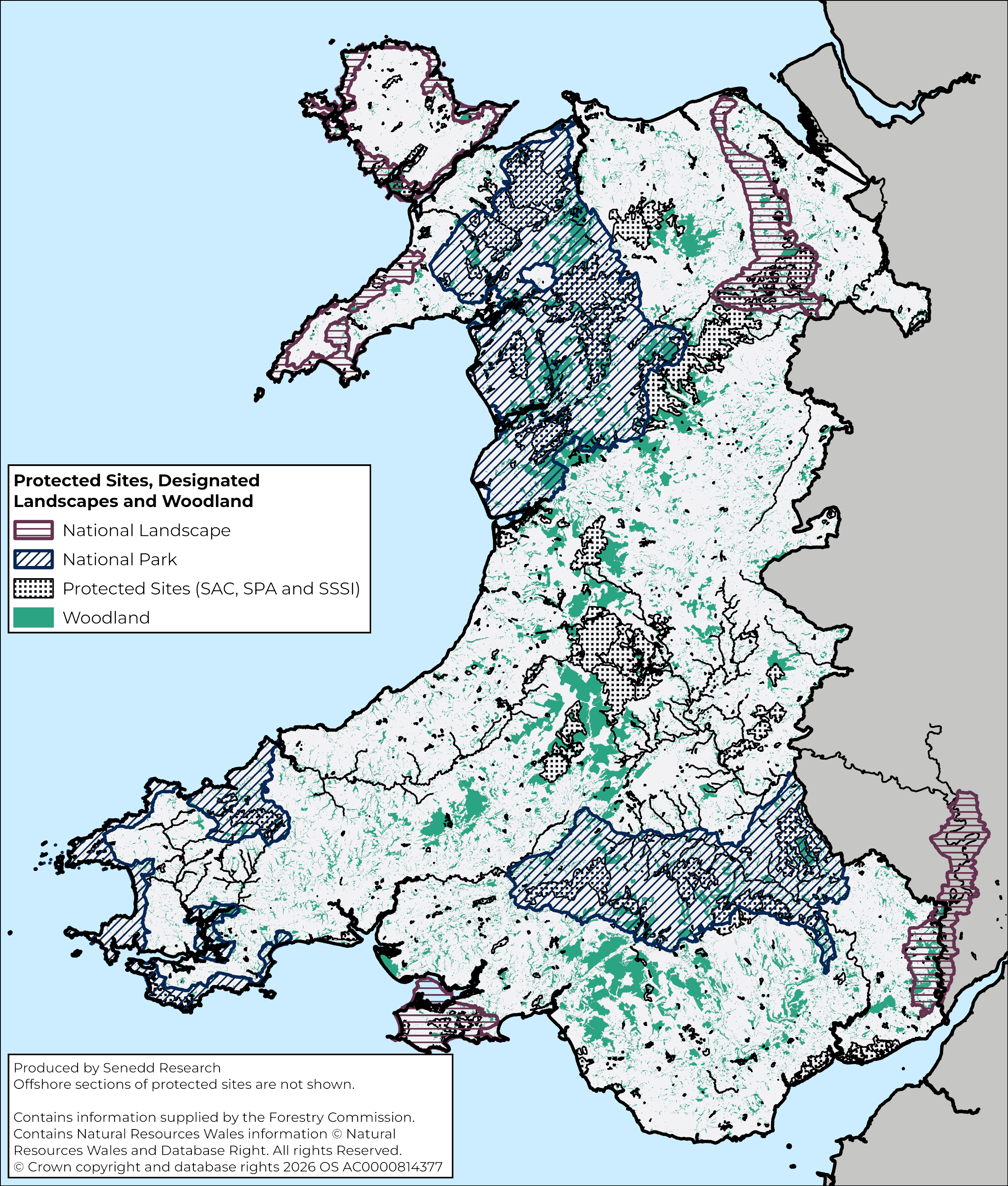
Figure 2: Map of rural and urban areas
Farming’s future
Farming’s future will be shaped by a combination of environmental targets, market pressures and evolving landuse policy, resulting in further diversification.
A general decline in livestock numbers is a concern for red meat processors, but farmers are expanding into areas including poultry, renewable energy, agritourism and value added food production to stabilise income.
Horticulture is receiving renewed attention as a way to increase domestic fruit and vegetable supply to improve food security and promote healthier diets.
Protecting fertile soils from development has also been highlighted during the Sixth Senedd.
Figure 3: Livestock numbers in Wales, 2004-2025
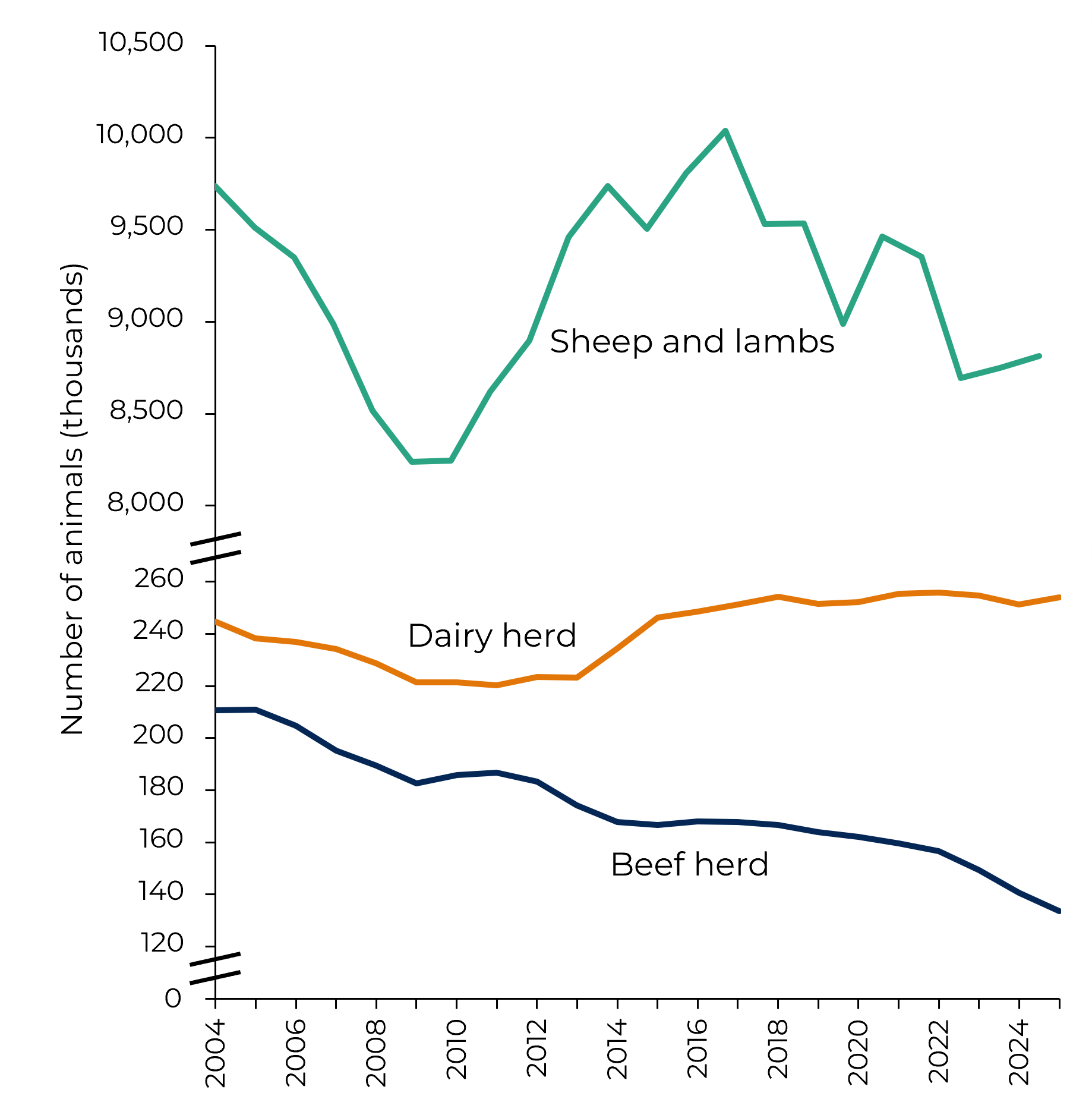
*Dairy and beef herd size is defined as the number of females aged 2+ years that have calved.
Source: UK Government, Department for Environment, Food & Rural Affairs
A place for nature
The previous Welsh Government aimed to set land aside for nature through ambitions to improve and expand the protected sites network. Environmentalists stress the condition of the network makes it difficult for Wales to reach its 2030 global biodiversity commitments.
Rewilding initiatives, often hotly debated in rural communities, aim to support large-scale nature recovery. A significant rewilding project is underway in Ceredigion.
Another article in this series explores nature and climate considerations.
The public’s right to enjoy the countryside
Growing public demand for outdoor recreation has sparked calls for improvement of public rights of way, and expanded rights for activities such as cycling and horse-riding. While supporting tourism, local economies and well-being, these rights must be balanced against environmental protection and the rights of land owners.
Together National Parks and National Landscapes cover 25% of Wales. With a number of purposes, they’re required to deliver sometimes conflicting objectives, for people with different priorities.
The previous Welsh Government committed to designating a new National Park in north east Wales. While views on the proposal are mixed, none of the five local authorities affected supports the designation.
Following a public inquiry, the incoming government will need to decide whether or not to proceed with the designation.
Wales needs to plant more trees
Woodlands bring environmental, economic and societal benefits.
The previous Welsh Government’s 2025 Timber Industrial Strategy aims to increase timber supply and add value to Welsh-grown timber.
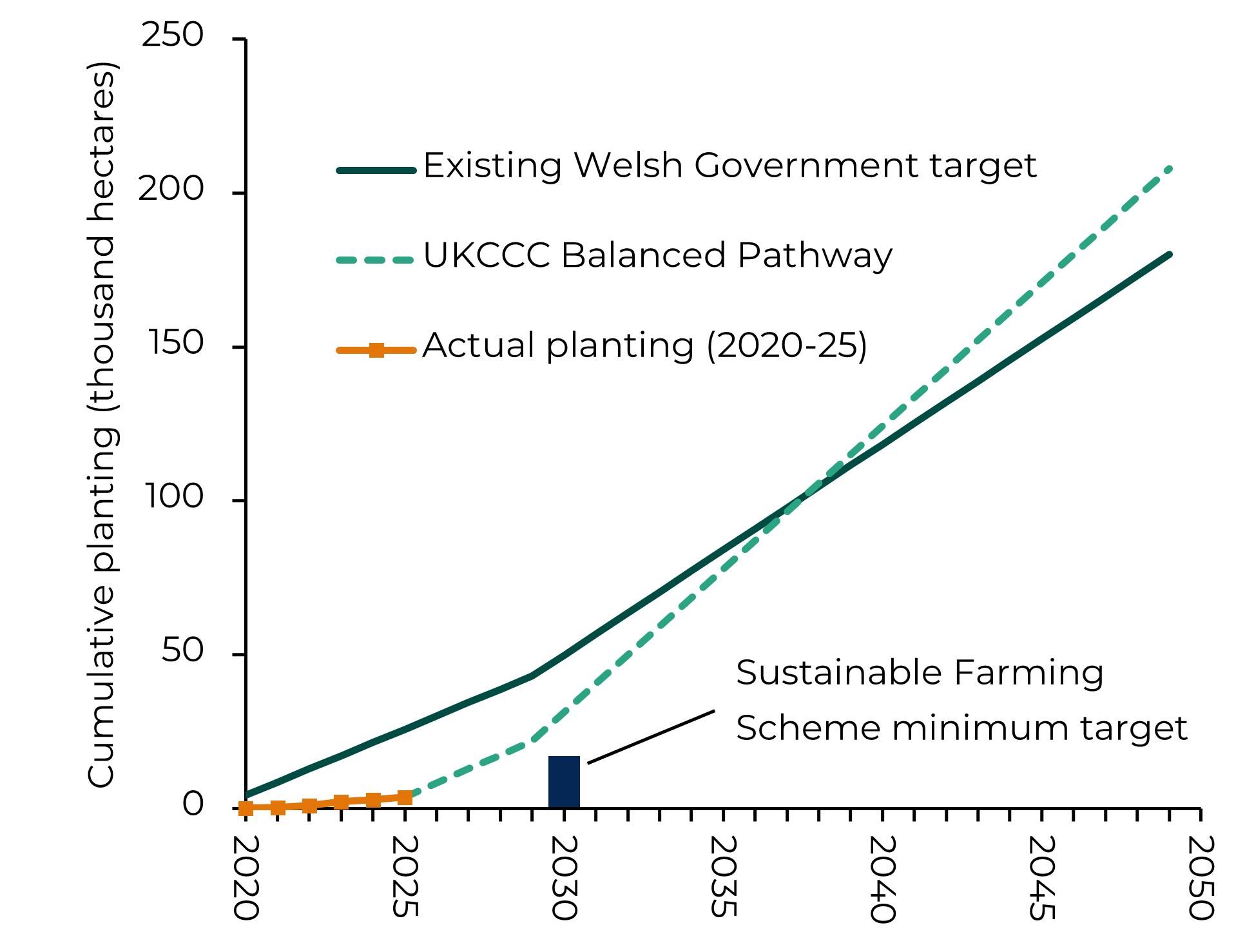
But tree planting rates are well below the previous Welsh Government’s target, set in 2021 - 43,000 hectares (ha) of new planting by 2030, and 180,000 ha by 2050. These targets are based on UK Climate Change Committee’s (UKCCC) advice. Just 3,700 ha have been planted since 2020.
More recently, the UKCCC’s Carbon Budget 4 advice set out a balanced pathway that would result in achieving 22,000 ha of new woodland by 2030 – less than half of the previous Welsh Government’s target – but under this pathway 208,000 ha would be achieved by 2050.
While the previous Welsh Government set the carbon emissions reduction level at the level recommended by the UKCCC, revising tree planting targets will be a decision for the incoming government.
Through the SFS, the previous Welsh Government aimed for 17,000–21,500 ha of new planting by 2030, mainly through optional incentives.
Even if achieved, the SFS aspiration only takes Wales half-way to the current target.
Figure 4: Tree planting targets and trajectories, 2020-2050
Source: Senedd Research analysis of data from: Welsh Government (forestry); Forest Research; UKCCC; Welsh Government (agriculture)
The National Forest initiative also aims to expand and restore woodlands, by establishing a forest stretching “the length and breadth of Wales”.
Yet, large scale tree-planting can be contentious and there has been unease in rural communities about corporations outbidding local families to buy farms to plant trees for carbon offsetting.
The countryside as Wales’ powerhouse
The previous Welsh Government aimed for Wales to generate the equivalent of 100% of its energy needs from renewables by 2035.
National planning policy, set out in Future Wales, supports renewable and low carbon energy development. There’s a presumption in favour of largescale wind energy development in ‘Pre-Assessed Areas for Wind Energy’ across rural Wales, and a new process to simplify infrastructure consents was introduced in 2025.
Recent monitoring work concluded Future Wales provides a sound national spatial foundation and immediate revision was not required.
The extent to which communities feel they have a meaningful say on large infrastructure projects is an ongoing issue, as is community benefit gained from the projects once operational.
Communities can feel discouraged from participating in consultations because of project complexity, consultation fatigue or an assumption the development is already a done deal. The previous Welsh Government argued the new consenting process improves community consultation.
The previous Welsh Government expected new renewable energy projects to have at least an element of local ownership, with a goal of 1.5 gigawatts of locally-owned capacity by 2035. Ynni Cymru was established to increase locally owned projects.
The landscape impact of new electricity transmission lines and pylons can also be a source of concern. The previous Welsh Government wanted new lines to be laid underground where possible, recognising it may not always be economically viable to do so. Where undergrounding isn’t possible visual impact should be minimised.
Discussions around balancing the competing demands on how rural land is used will continue well beyond a single Senedd term. But the Seventh Senedd will be keenly anticipated by all those with a stake in the countryside, not least the communities who call rural Wales home.
Article by Elfyn Henderson and Dr Katy Orford, Senedd Research, Welsh Parliament