








With key reforms being implemented in both Wales and Westminster, making buses, trains and local transport plans work together will be a defining challenge for delivery of a modern, reliable Welsh transport system.
Integrating public transport has been a focus of Senedd scrutiny for years, and the benefits are widely acknowledged. However, integration through coordinated timetables, clear information, connected infrastructure, fares and ticketing, has proven challenging.
The previous Welsh Government’s White Paper, One network, one timetable, one ticket: planning buses as a public service for Wales, outlined a vision for a bus system within an integrated transport network.
With the Bus Services (Wales) Act 2026 now passed by the Senedd, and a Railways Bill introduced at Westminster, the next few years present both opportunities and risks on the path to delivery of an integrated network.
|
What’s devolved? Many key transport powers are devolved, but significant areas remain reserved which complicates integration. The Welsh Government controls Wales and Borders Rail Services operated by TfWRail via Transport for Wales and owns the Core Valley Lines. Yet the rail system as a whole is reserved, with most infrastructure the responsibility of Network Rail and controlled from Westminster. Wales can invest in rail but receives no dedicated block grant. Bus service regulation and taxi/ private hire vehicle licensing are devolved, as are many highway responsibilities, while bus operator licensing, as well as matters like driver training, vehicle standards and related offences remain reserved. |
Bus reform
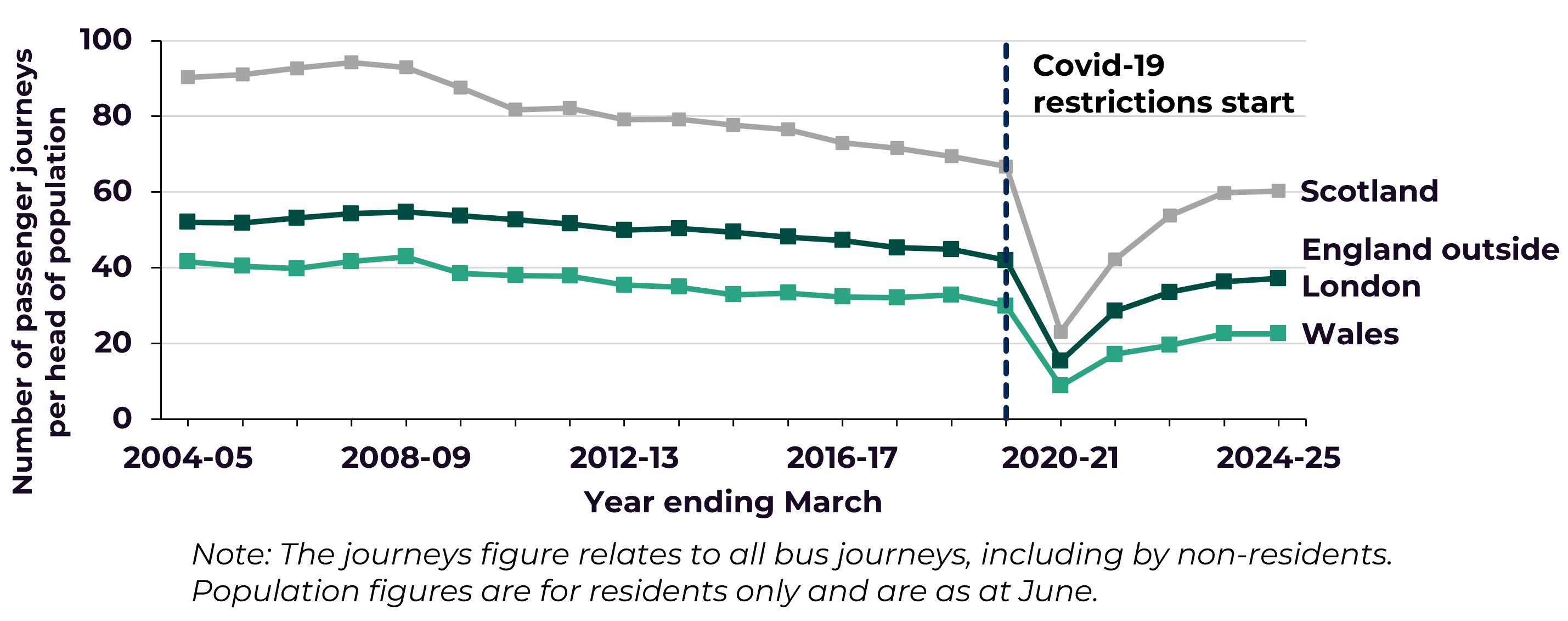
Bus passenger numbers across Great Britain have been declining for two decades, but Wales has consistently recorded fewer journeys per capita than elsewhere, and been slower to recover post-pandemic.
Figure 1: Bus passenger journeys per head of population
Source: Senedd Research analysis of Department for Transport data, Local bus passenger journeys
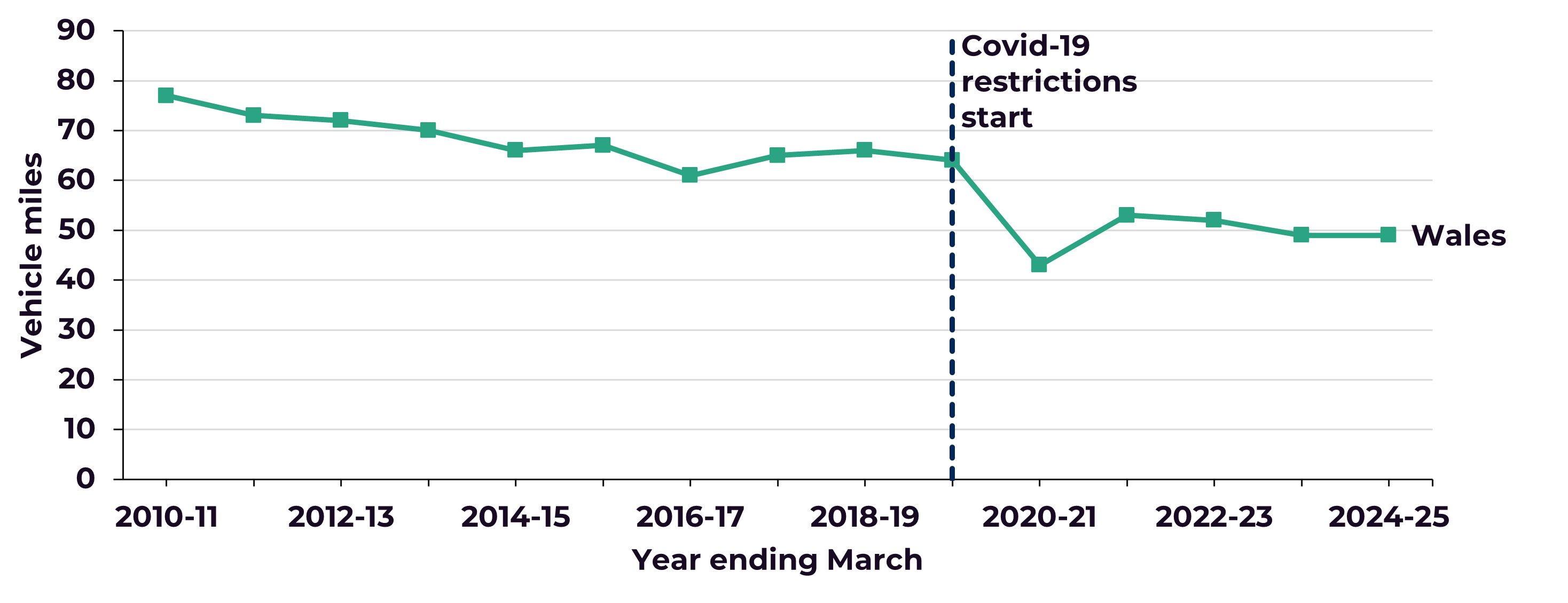
Figure 2: Bus vehicle distance travelled (miles)
Source: Senedd Research analysis of Department for Transport data, Local bus vehicle distance travelled
The reasons for decline are complex. However, the deregulated bus market outside London is widely regarded as a barrier to integration: operators can register or withdraw services at short notice and competition law restricts coordination of timetables, fares and ticketing by operators.
Across Great Britain, there have been moves towards re-regulation. England and Scotland have legislated to enable local government to get more involved in planning services, including through franchising. Greater Manchester has become the first region (outside London) to implement franchising at scale.
The 2026 Act takes a more fundamental approach in Wales, transferring responsibility for planning bus services from local authorities to the Welsh Government, to be delivered through Transport for Wales (TfW), and making franchising the default nationwide.
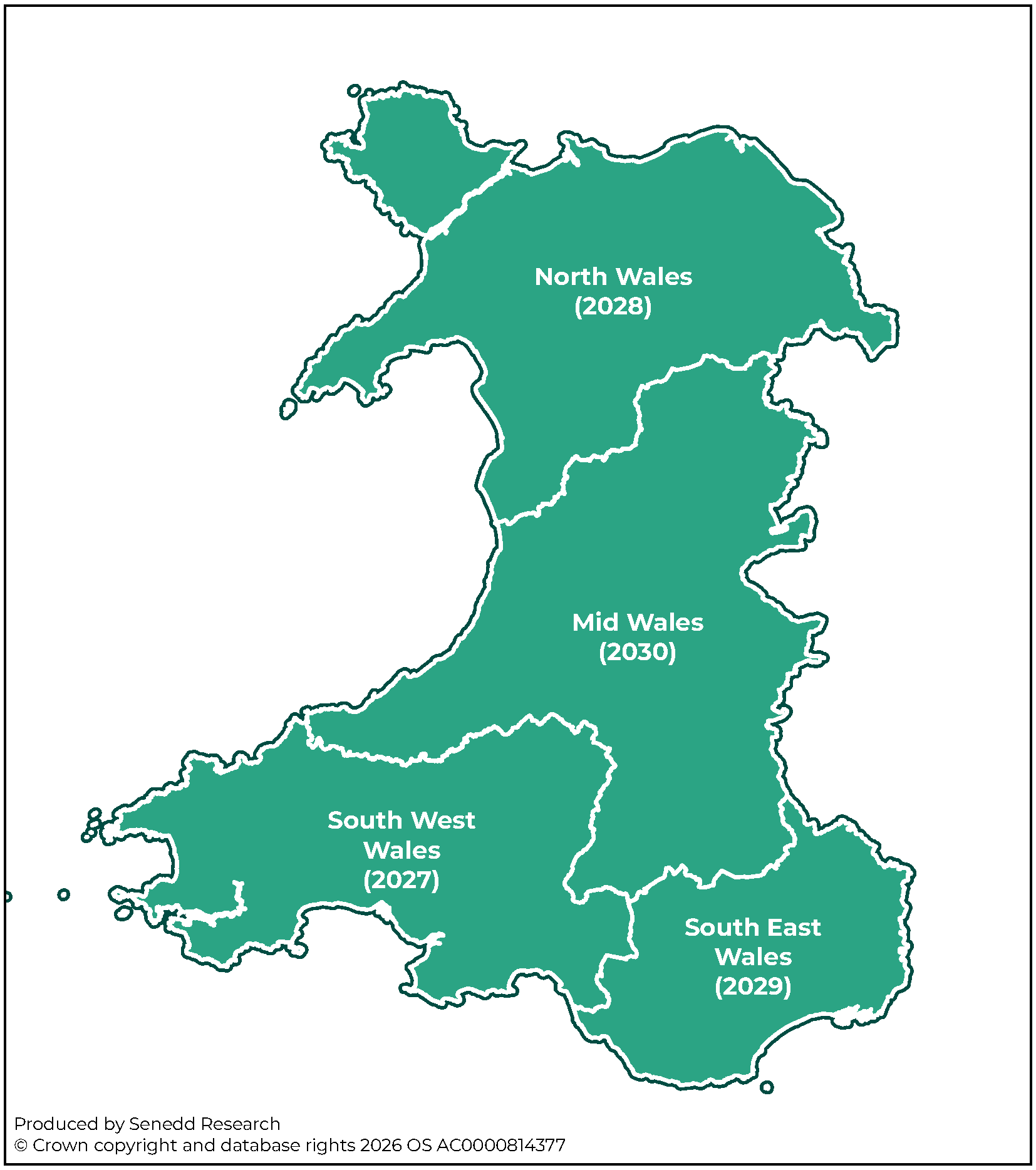
Implementing this system is a major undertaking. TfW plans to introduce franchising in four regional phases by 2030. Senedd scrutiny highlighted risks including funding pressures, Wales’ reliance on small and medium-sized operators (many of which provide learner travel services), and the significant investment required in new fleet.
Experience in Manchester - where for example small and medium-sized enterprises (SMEs) struggled to secure franchise contracts - shows the challenges ahead, making TfW’s engagement with SMEs particularly critical.
|
What is franchising? Franchising will see operators bid for contracts to provide bus services on bundles of routes identified by the Welsh Government and TfW. There are various contract options. The last Welsh Government proposed a ‘gross cost’ model, where it would receive ticket revenues and pay operators a fee with monetary incentives. |
Figure 3: Implementation of bus franchising in Wales by area
Source: TfW/Welsh Government - Bus reform for Wales: our roadmap to franchising
Rail
Just over 30 years after privatisation, rail services in Great Britain are again undergoing major reform.
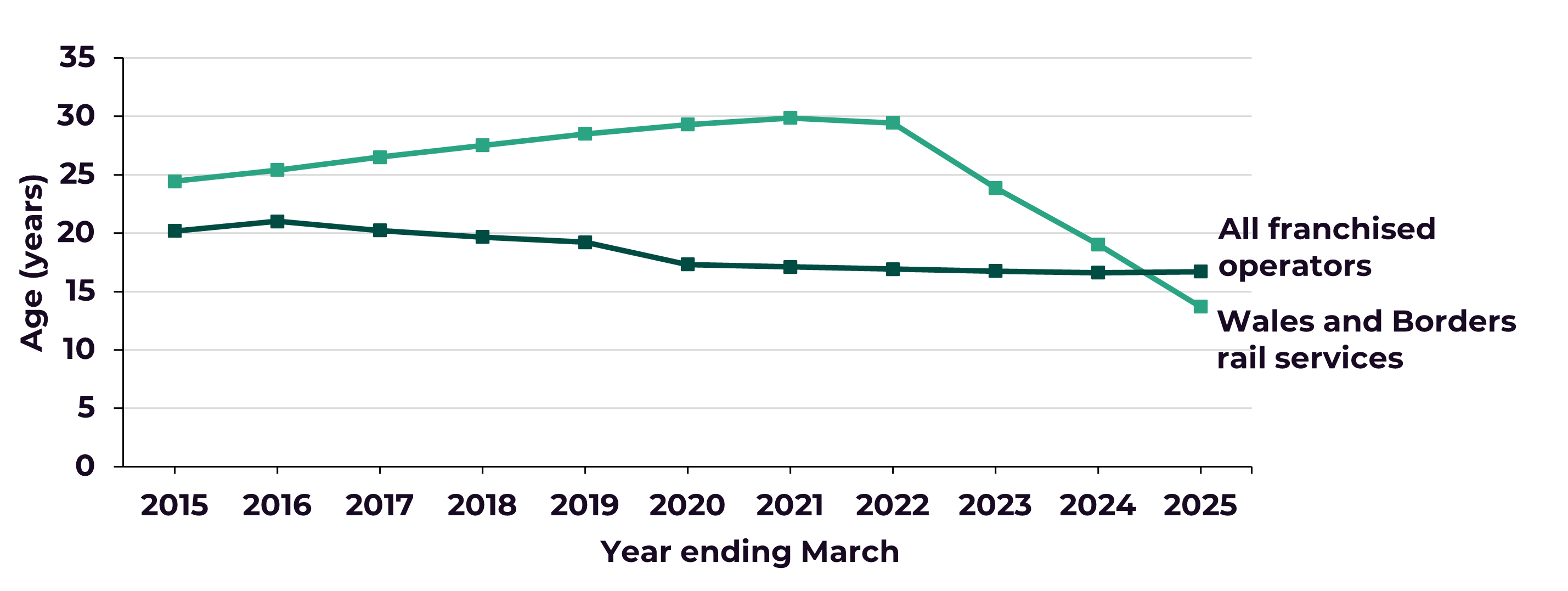
Welsh rail has already experienced significant change. The first Welsh procured Wales and Borders franchise was awarded in 2018, with major investment commitments, including modernisation of the Core Valley Lines (CVL) following their transfer to the Welsh Government. TfWRail services were nationalised in 2021. Investment of £800m is modernising Wales and Borders rolling stock (trains), though the previous Welsh Government’s target for 95% of journeys on new trains has been delayed.
Figure 4: Average age of rolling stock on rail passenger services
Source: Senedd Research analysis of Office of Rail and Road data, Average age of rolling stock by operator
TfWRail services have seen recovery in passenger numbers and revenue since the pandemic. However, performance has been mixed, with challenges linked to the introduction of new rolling stock, CVL modernisation and ageing Network Rail owned infrastructure. Services have performed better on the Welsh Government-owned CVL than the wider non-devolved network.
Figure 5: Rail passengers carried and farebox revenue
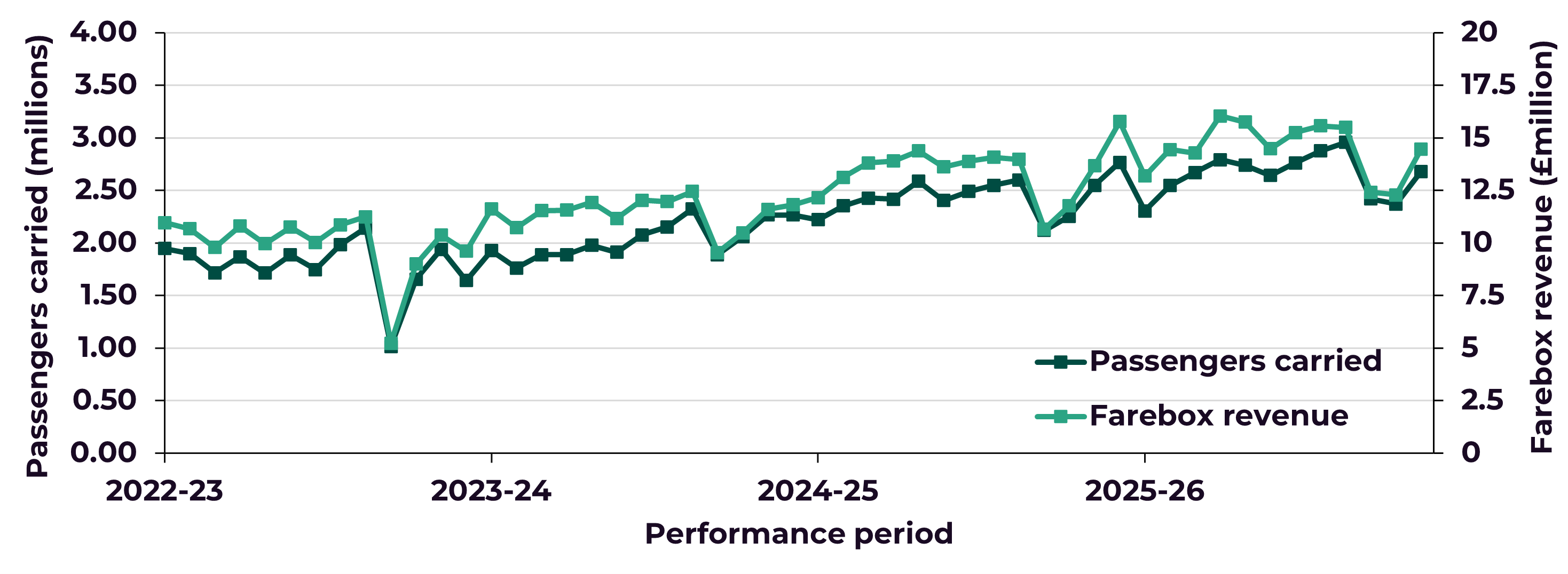
Note: Each financial year consists of 13 ‘railway periods’. These are all 28 days except period 1 (starts 1 April) and period 13 (ends 31 March).
Source: Senedd Research analysis of Transport for Wales performance data
Figure 6: Percentage of rail passenger services arriving within 3 minutes of scheduled arrival time
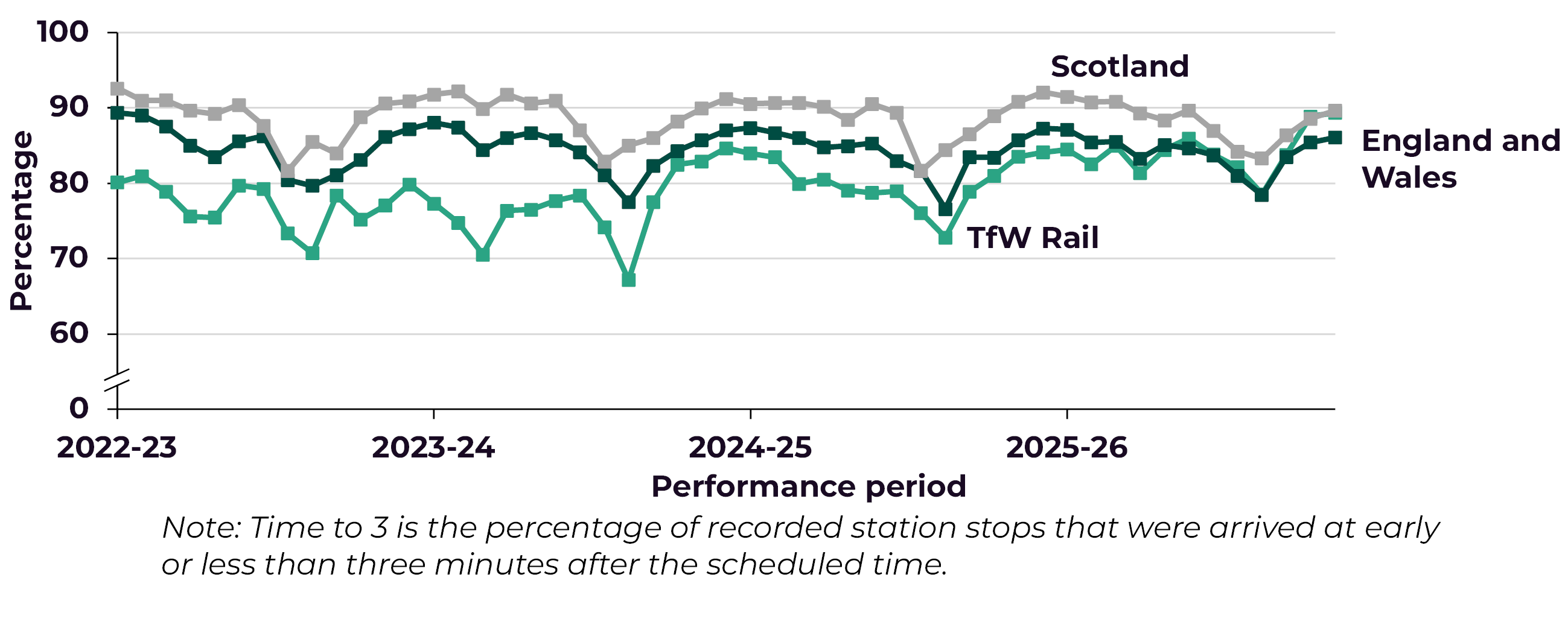
Source: Senedd Research analysis of Office of Rail and Road data, Train punctuality at recorded station stops by operator
Figure 7: Adjusted cancellations score – rail passenger services
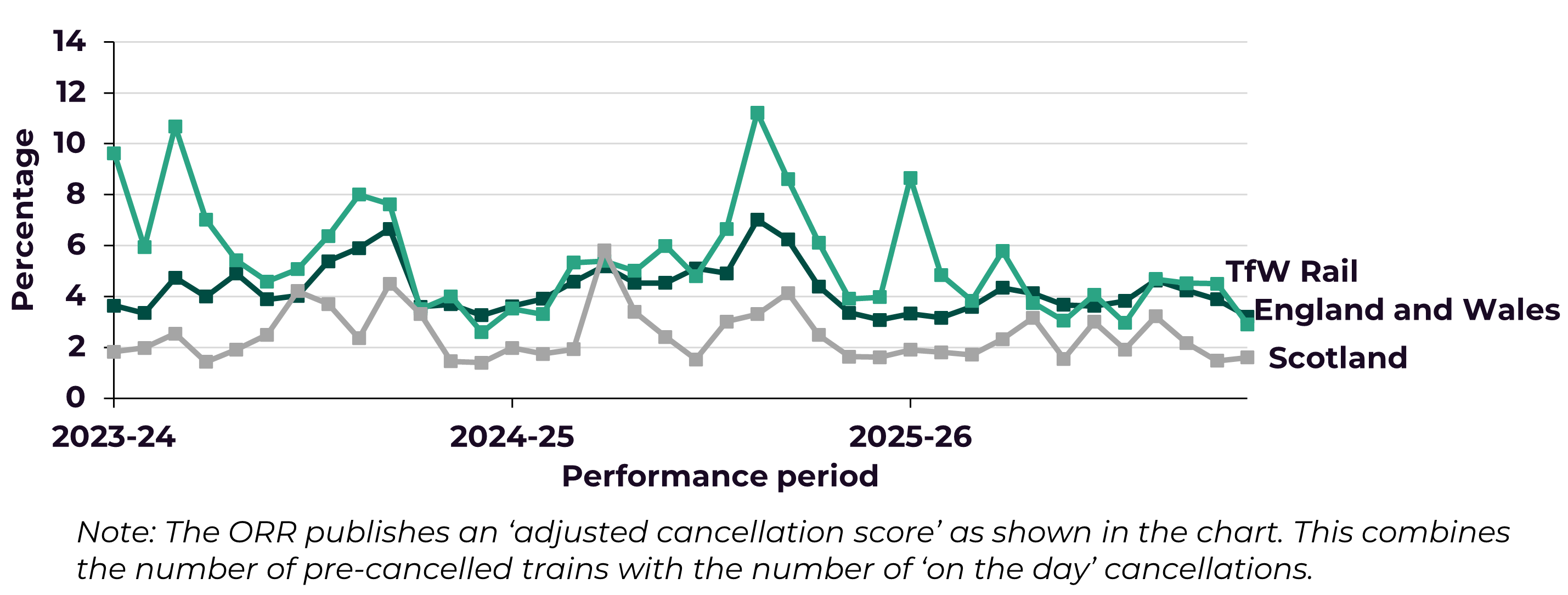
Source: Senedd Research analysis of Office of Rail and Road data, Cancellations by operator and p-code
Following legislation to renationalise all rail services in 2024, a Railways Bill was introduced to the UK Parliament in 2025 to create Great British Railways (GBR), nationalising and vertically integrating English passenger services with infrastructure. TfWRail services will remain under Welsh Government control.
Senedd scrutiny has highlighted risks for Wales, particularly the lack of statutory enforcement for the Memorandum of Understanding between the two governments, which is essential for securing Welsh influence and fair access to the GBR managed network.
The planned partnership agreement between TfW and GBR is non-statutory, as is the Wales Rail Board which has developed a pipeline of major rail projects, and will be key to their prioritisation. While the UK Government has announced £14bn for Welsh rail infrastructure over the next 15–20 years, the durability of these commitments across future governments remains uncertain. Local and regional transport priorities will be key
While the 2026 Act transfers responsibility for planning and delivering local bus services from local government to the Welsh Government, local authorities will continue to play a crucial role. They will remain responsible for key issues like local highways, learner travel, and most bus infrastructure.
Delivery of the new Regional Transport Plans, produced by Corporate Joint Committees (CJCs), will be central. These are supported by the new Regional Transport Fund, which for the first time in 2026-27 brings together several former Welsh Government grants, devolved to local government, to support the regional programme.
Tackling traffic congestion, which impacts the economic viability of bus services, will be a major challenge. The 2026 Act requires the Welsh Government to remove barriers that discourage bus use. The previous Welsh Government committed to align Regional Transport Plan guidance with statutory bus network plans.
With a bigger gap between operating costs and revenues for bus services in Wales than Scotland and England, it’s no surprise that the Welsh bus industry sees addressing congestion as crucial to success.
Figure 8: Income per bus passenger journey adjusted for inflation
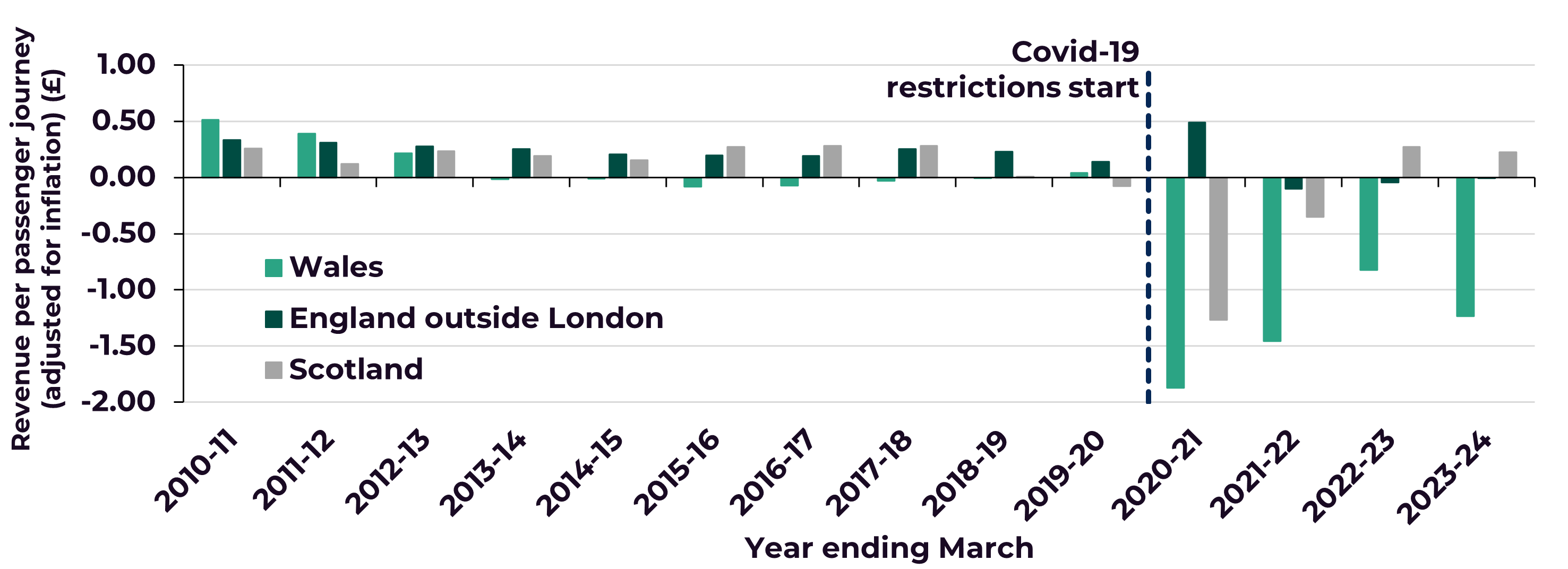
Source: Senedd Research analysis of Department for Transport data, Costs, fares and revenue
Integrating transport
TfW has made progress on integrating and simplifying public transport use, for example introducing Pay As You Go ticketing on the CVL - the first use of this technology outside London, and soon to be extended to north east Wales - as well as combined bus–rail tickets in some areas.
However, even with the new statutory arrangements for bus and rail, the technical challenges remain significant, not least designing effective information, fares and ticketing systems and ensuring infrastructure and networks meet public needs.
The three ‘Metro’ systems planned across Wales are central to this goal. The South East Wales Metro is the most advanced, with modernised CVL rail services completed in March. Network North Wales and the Swansea Bay and West Wales Metro are less advanced. TfW is also developing the ‘T Network’, focusing on the organisational governance and culture changes needed to deliver integration.
Aspirations for sustainable integrated transport will also require improvements in areas such as active travel, where progress has been seen as disappointing. The last Welsh Government’s promised reform of taxi and private hire vehicle regulation did not proceed, with the Bill withdrawn from the legislative programme in 2024.
If realised, delivery of an integrated public transport system is expected to bring significant economic, social and environmental benefits to Wales. However, success will depend on the effective delivery of legislation, strong partnerships and sustained investment.
Article by Andrew Minnis and Francesca Howorth, Senedd Research, Welsh Parliament