We want to hear your views about Senedd TV. Take our short survey to help us improve the service.









Young people’s experiences of not being in education, employment or training (NEET)
Published 06/11/2026 | Reading Time minutes
With more young people becoming NEET, what solutions are young people calling out for that policymakers should consider?
"A generation under pressure but bursting with potential"
Recent UK-wide reporting and Senedd discussions have raised the profile of the growing number of young people not in education, employment or training (NEET). Young people considered NEET were also a topic of discussion for the Senedd’s previous Early Years, Children, Young People and Education Committee. An inquiry into post-16 education and training highlighted the need for more accessible pathways for those that are NEET, and other organisations, such as Audit Wales, are calling for more tailored support, particularly for those facing additional barriers.
This article explores young people’s experiences of being NEET and a possible framework for accessing support that’s been suggested by the Inside of a Young Mind NEET study, to address the diverse challenges they might face. Senedd Research published an article in July exploring young people who are NEET and their connection to the labour market, including support available and how the Welsh Government is responding to the challenge.
NEET young people in Wales and the UK
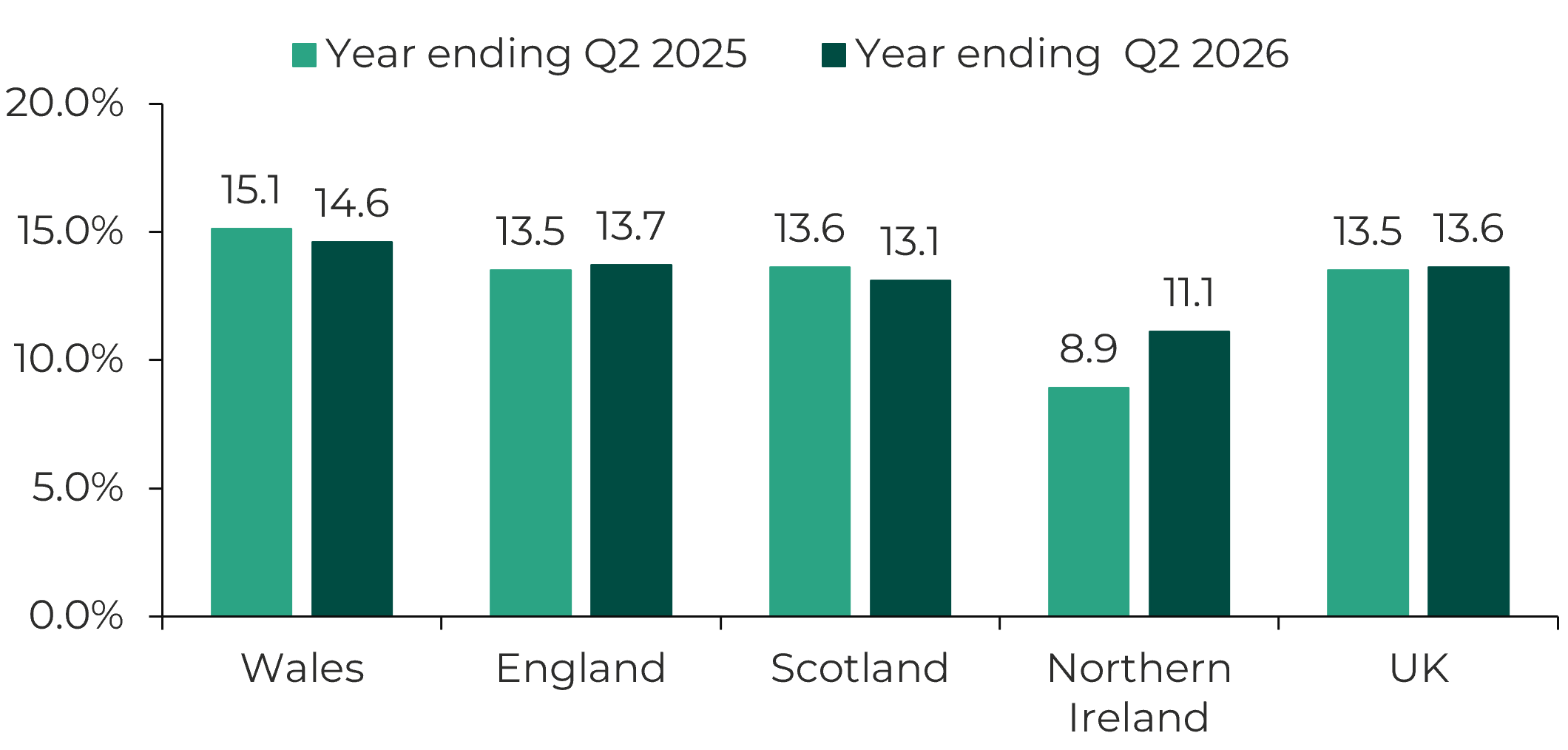
Wales has the highest percentage of NEET young people aged 16-24 across the UK (14.6%), but has experienced a slight decrease in numbers from June 2025 to June 2026. In other regions, England and Scotland have seen slight changes and Northen Ireland have seen a significant increase.
Figure 1: Proportion of NEET young people across the UK in 2025 and 2026
- Source: Young people not in education, employment or training (NEET): July 2025 to June 2026 | GOV.WALES
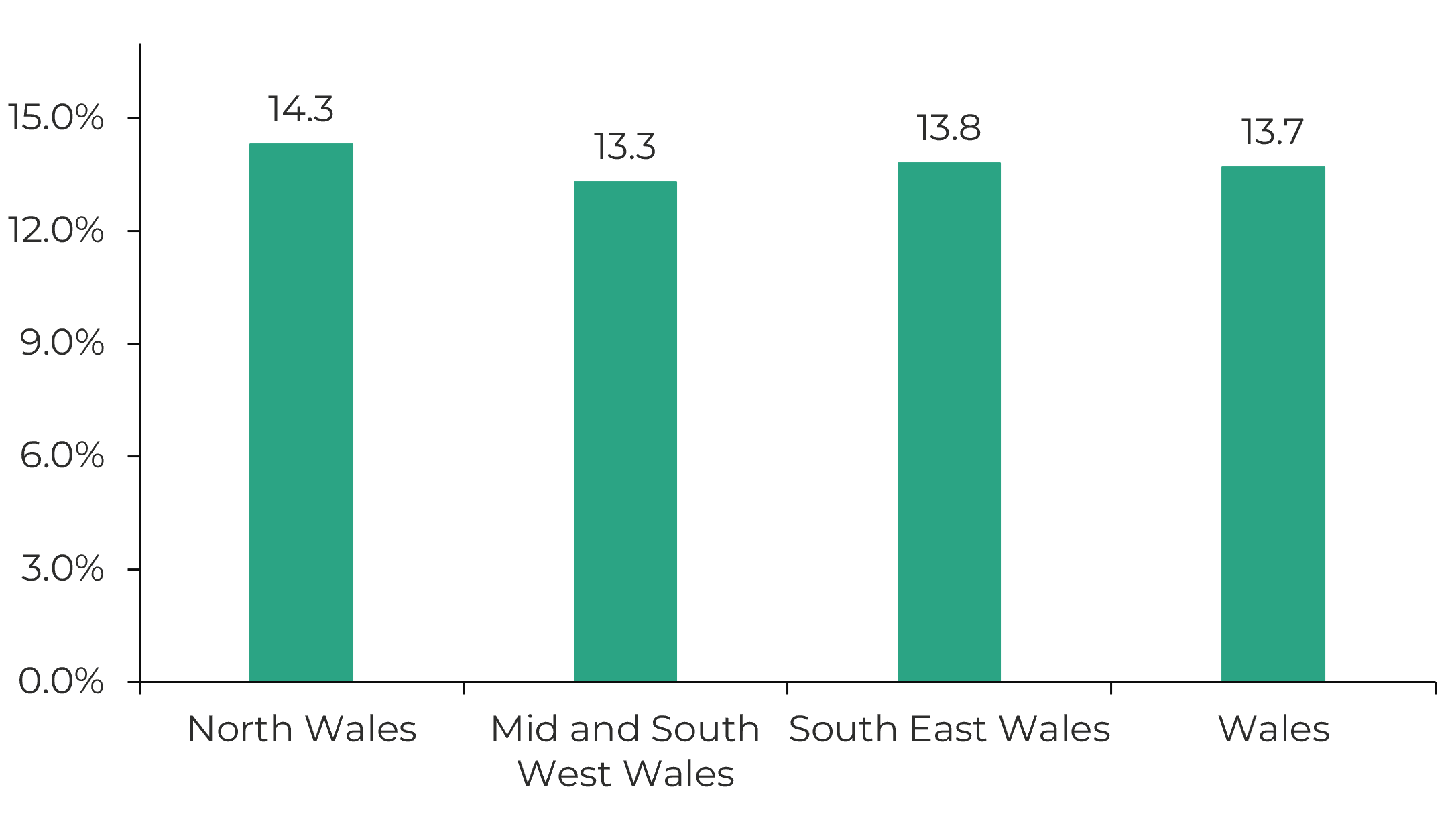
Figure 2: Average proportion of NEET young people across Welsh economic regions over the last 3 years
- Source: Young people not in education, employment or training (NEET): July 2025 to June 2026 | GOV.WALES
On average over the last three years in Wales there have been some differences in NEET rates across Welsh economic regions, with the highest being in North Wales (14.3%) and the lowest in Mid and South West Wales (13.3%).
A survey by the Department for Work and Pensions suggests that 84% of NEET young people want to be employed, in education or training. 81% of those surveyed were dissatisfied with the education system and felt there was too much focus on exams. Of the respondents, 67% felt school did not adequately prepare them for work. This points to a system that isn’t working for young people, raising questions around how they can be better supported through education and training to enter the world of work.
“A system with too many snakes and not enough ladders” – the challenges young people face
Featured in the Milburn interim report is the Inside the Mind of a Young NEET study. It explores the voices and experiences of over 400 young people who were interviewed across the UK that are currently NEET, including Welsh young people from Wrexham and Cardiff.
The study and Milburn report highlight that young people who are NEET cannot be seen as one single group of people. They have a wide range of experiences and face different challenges. We can also see from the report that 6 in 10 young people who are NEET today have never had a job, yet 4 in 10 NEET young people had qualifications at A level or above. This generation faces a unique combination of challenges such as poverty, COVID, loneliness, social media addiction and cost-of-living pressures.
While not every young person experiences every challenge, the Milburn report argues that barriers rarely come alone. Seen separately, problems can look manageable, however, for example; mental health is made worse by isolation, and caring responsibilities can affect attendance. Findings from the survey by the Department for Work and Pensions suggest the challenge lies in understanding young people to build routes that can sustain the complexities in their lives.
Below are some accounts of Welsh people’s experiences from the study:
A young woman in Cardiff, a wheelchair user with Functional Neurological Disorder expressed her experience of the benefits system, suggesting a diagnosis does not make barriers disappear. She described being removed from a course because of attendance problems which were caused by her condition and being placed in a flat where “everything is accessible except for my kitchen”, despite asking to change her residence for three years. |
Another young person from Cardiff described adult services making her retell her trauma because the information was not joined up. She said “the bookkeeping’s not great… I have to re-explain everything. Which I wasn’t willing to do, because why would you want to re-traumatise yourself every time you get a new therapist?” |
A young man diagnosed with autism and ADHD spoke of needing a diagnosis to receive the support he needed. He suggested that “mainstream schools will find a way to say no, because they don’t want to spend the extra money. They need that diagnosis to go forward with things.” |
A young person from Cardiff shared: “I went to two different primary schools because of bullying”, which then continued in high school. They also said: “the school did nothing about that? Nope”. |
A Cardiff care leaver said they ended up playing Xbox, ordering food and being unable to leave her house for over a year, and described crippling anxiety and feeling “quite, like, mentally ill”. |
In Wrexham, the room of young people interviewed suggested they need “better stuff on mental health”. They were supported by others across the study calling for more leniency and “not shaming kids for not coming into school because they’re having a death”. |
Traffic light framework of support
The Inside the Mind of a Young NEET report proposes a framework to describe a young person’s distance from work and as a guide to help close that distance.
The framework looks more closely at why a young person is out of work, what support or action is needed next, and what the system needs to do.
The framework suggests that with the right support, a young person can shift from red to amber or amber to green, however without support or with the wrong support, a young person can easily move in the other direction. The framework maps the potential for different policy responses and identifies the type of support a young person may need.
Figure 3: Traffic light system showing distance from work
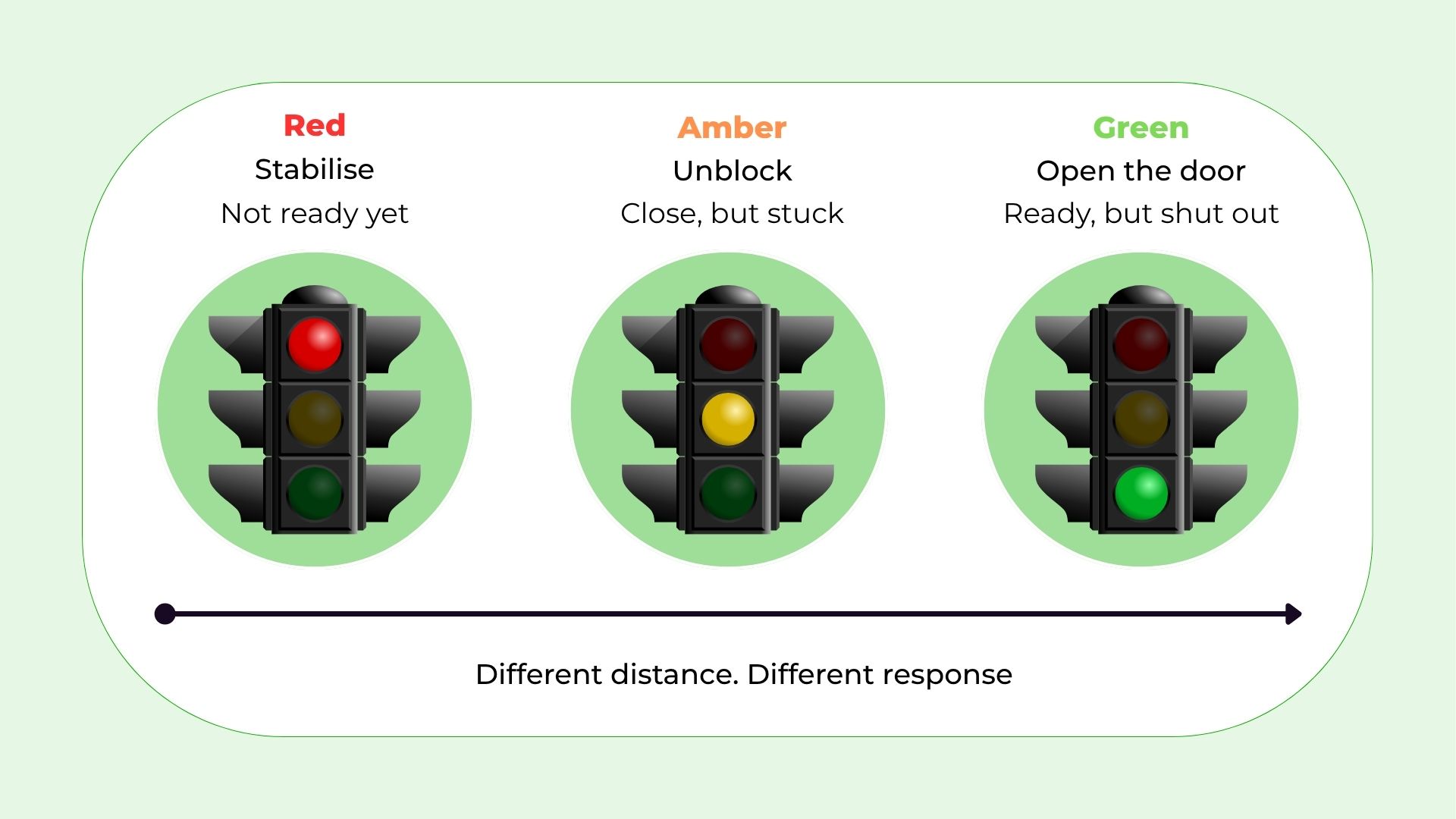
Table 1: Characteristics and suggested support for each category of the traffic light system
Category | Characteristics | Suggested Support /Interventions |
|---|---|---|
Red – Stabilise The young person is not ready yet and pushing them towards work might backfire | Significant barriers to work including mental health struggles, trauma, unstable housing, undiagnosed neurodivergence, care living experience, exclusion, family breakdowns. | Relationship-based approach centred around consistency, safety and trust to support the daily basis of life. |
Amber - Unblock The young person is close, but stuck behind something specific, and often practical, that may have hampered their confidence | Specific barriers and suffering from lack of confidence or self-belief because of setbacks or inactivity. Examples include needing a qualification, reference, placement, interview rehearsal, or help with the processes. A small barrier or long delay can lead to a loss of confidence or missed opportunities. | Practical and targeted support such as funding retakes, paying travel, chasing paperwork, explaining routes, practising interviews, finding placements, and support reaching next step. |
Green – Open the Door The young person is ready. The barrier is on the employer or system side | Ready to work but the barrier is on the employer or the system side. For example, a ‘rejection economy’ that provides no responses or feedback to job applications, and no set ways to improve. | Employer brokerage, guaranteed feedback, supported applications, accessible recruitment, local opportunities, paid placements, help with DBS checks, and bus fare to interviews. |
Source: Inside the Mind of a Young NEET
Difficulty accessing services and school struggles
Young people across the UK reported difficulty accessing support services, suggesting that they were available in principle but not in reality. They highlighted their need for a trusted adult to support them in key transitional moments and that they want to work, but entry level jobs are hard to get, and without experience, often impossible.
Young people also reflected that school “does not prepare you for life or work”. They spoke of bullying making school difficult and traumatic, exam pressures, a lack of pathways other than university, and little guidance of options after school. They also expressed their frustration with a lack of understanding for those caring for relatives, those in care, and those with neurodiversity or mental health issues that were made worse by a culture of rigid discipline and control.
Despite the previous Welsh Government’s Young Person’s Guarantee, the proportion of young people that are NEET remains higher in Wales than the rest of the UK. In the Programme for Government 2026 to 2030, the Welsh Government says it is “imperative that we have a skills system that is easily accessed by leaners, with accessible education and training options to prevent people slipping into economic inactivity or becoming NEET”.
The final Milburn report is expected later this year and will renew the focus on addressing the challenges facing young people who are NEET. Responding to these challenges is likely to remain a continued area of focus for the remainder of the Seventh Senedd.
Article by Erin Howard-Cook, Senedd Research, Welsh Parliament
Senedd Research acknowledges the parliamentary fellowship provided to Erin Howard-Cook by the WGSSS and ESRC which enabled this article to be completed.