The Senedd and Pierhead buildings will be closed to the public on Thursday 15 October. Read information about the closure.









COP17: Nature recovery in Wales on a global stage
Published 13/10/2026 | Reading Time minutes
Next week, governments from around the world will gather in Armenia to assess global efforts on biodiversity recovery.
The 17th Conference of the Parties to the Convention on Biological Diversity (COP17) will take place from 19-30 October, in Yerevan, to consider countries’ delivery of the Global Biodiversity Framework (GBF) ambitions set in 2022 at COP15.
The UK is a Party to the GBF and, as biodiversity is a devolved area, the Welsh Government has a role to play. Welsh Government officials plan to attend COP17.
The GBF aims to halt and reverse the loss of nature by 2030 and achieve recovery by 2050.
Figure 1: The Global Biodiversity Framework ambition to halt and reverse the loss of nature by 2030 and achieve recovery by 2050
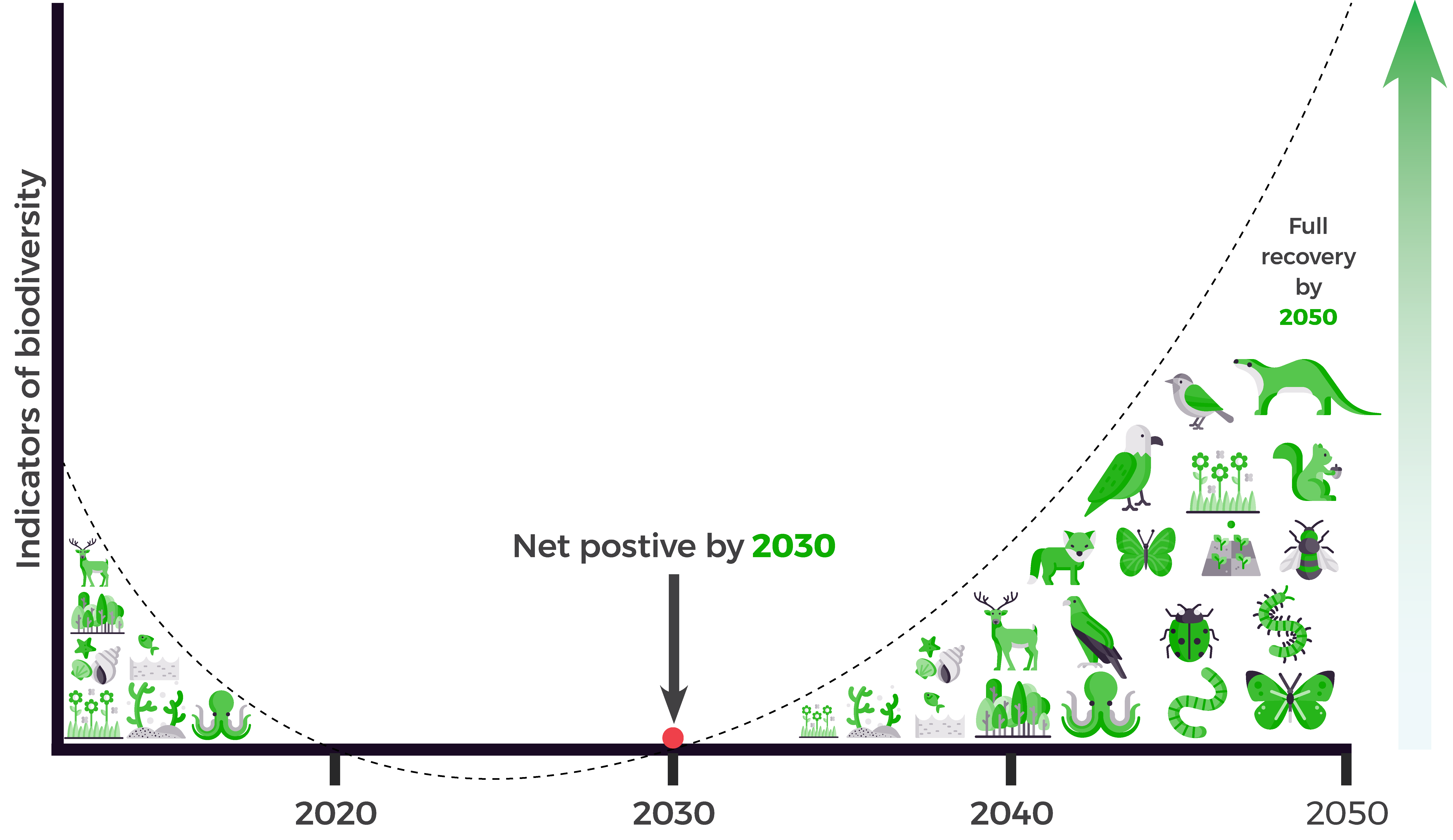
Source: adapted from naturepositive.org
The GBF contains 23 global 2030 targets covering issues such as habitat protection, species recovery, pollution reduction, sustainable production and consumption, financing, and integration of biodiversity across government policy.
COP17 will assess whether national plans and funding arrangements are sufficient to meet the 2030 deadline. With just four years to go, this stock-take comes at a crucial moment.
How has Wales responded to the Global Biodiversity Framework?
The GBF requires countries to produce a National Biodiversity Strategy and Action Plan, which sets out how they will deliver against GBF commitments.
While the UK Biodiversity Framework (2024) provides the overarching UK response to COP15 commitments, Wales has developed its own policy approaches in a devolved context. The previous Welsh Government published its Nature Recovery Action Plan (NRAP) in March 2026 which serves as its GBF strategy. It remains to be seen how this strategy will be taken forward by the new Welsh Government.
The previous Welsh Government also developed a framework for delivering the GBF's ‘30 by 30’ target: to protect and effectively conserve 30% of land, freshwater and sea for nature by 2030.
In addition, the Environment (Principles, Governance and Biodiversity Targets) (Wales) Act 2026 requires the Welsh Government to set legally binding Welsh biodiversity targets by April 2028 to align with the GBF ambitions.
How is the UK and Wales performing against GBF commitments?
The recently published 7th (periodic) National Reportis the UK’s official report on progress against the GBF targets to the Convention on Biological Diversity. While it reports progress at a UK level, it does highlight contributing policies in Wales.
So far the UK is only on track to achieve three of the 23 targets by 2030
|
2030 Target |
UK status |
|
|
Plan and manage all areas to address land and sea use change and reduce biodiversity loss |
Progress made, but at an insufficient rate |
|
|
Ensure at least 30% of degraded ecosystems are under effective restoration |
Progress made, but at an insufficient rate |
|
|
Effectively conserve and manage at least 30% of land and 30% of ocean (30 by 30) |
Progress made, but at an insufficient rate |
|
|
Halt species extinction, protect genetic diversity, and manage human-wildlife conflicts |
Progress made, but at an insufficient rate |
|
|
Ensure sustainable, safe and legal use, harvesting and trade of wild species |
Progress made, but at an insufficient rate |
|
|
Reduce the introduction of invasive alien species by 50% and minimise their impact |
Progress made, but at an insufficient rate |
|
|
Reduce pollution from all sources to levels not harmful to biodiversity |
Progress made, but at an insufficient rate |
|
|
Minimise climate change impacts on biodiversity and build resilience |
Progress made, but at an insufficient rate |
|
|
Ensure management and use of wild species are sustainable and deliver benefits for people |
Unknown |
|
|
Enhance biodiversity and ensure sustainable management of agriculture, aquaculture, fisheries and forestry |
Progress made, but at an insufficient rate |
|
|
Restore, maintain and enhance nature’s contributions to people |
Progress made, but at an insufficient rate |
|
|
Enhance green and blue spaces and urban planning for health, wellbeing and biodiversity |
Progress made, but at an insufficient rate |
|
|
Ensure fair and equitable sharing of benefits from genetic resources, digital sequence information and traditional knowledge |
On track |
|
|
Integrate biodiversity into decision-making at every level |
Progress made, but at an insufficient rate |
|
|
Encourage businesses to monitor, assess and disclose biodiversity-related risks |
Progress made, but at an insufficient rate |
|
|
Enable sustainable consumption choices and reduce waste and overconsumption |
Progress made, but at an insufficient rate |
|
|
Establish biosafety measures and distribute the benefits of biotechnology |
On track |
|
|
Reduce incentives harmful to biodiversity and scale up positive incentives |
Progress made, but at an insufficient rate |
|
|
Increase financial resources for biodiversity |
Progress made, but at an insufficient rate |
|
|
Strengthen capacity-building, technology transfer and scientific and technical cooperation for effective implementation and biodiversity |
On track |
|
|
Ensure that knowledge is available and accessible to guide biodiversity action |
Progress made, but at an insufficient rate |
|
|
Ensure participation, access to information and justice in biodiversity decision-making |
Progress made, but at an insufficient rate |
|
|
Ensure gender equality and a gender-responsive approach in biodiversity action |
Progress made, but at an insufficient rate |
|
Source: Information from the 7th National Report to the UN Convention on Biological Diversity
Last year, the environment sector produced its own UK progress report, specifically on the ‘30 by 30’ target (Figure 2).
The Sixth Senedd’s Climate Change, Environment and Infrastructure (CCEI) Committee also published a report on progress towards halting nature loss by 2030 and the ‘30 by 30’ target.
These reports reached the same conclusion, that while progress has been made towards the 23 GBF targets, it has been at an insufficient rate. The sections below focus on some of the key themes.
Biodiversity continues to decline
Natural Resources Wales' State of Natural Resources Report 2025 concludes that biodiversity loss remains a significant concern. It highlights that ecosystems across terrestrial, freshwater and marine environments continue to face substantial pressures e.g. from pollution, unsustainable land use and climate change. The report highlights that Wales is among the most nature-depleted countries in the world with nearly one in five species at risk of extinction.
The ‘30 by 30’ target is a major challenge
One of the clearest indicators of the scale of the challenge is the ‘30 by 30’ commitment.
The previous Welsh Government noted the types of protected areas that would meet the criteria to count towards 30 by 30: Sites of Special Scientific Interest (SSSIs), Marine Conservation Zones (MCZs), Ramsar sites, Special Protection Areas (SPAs), Special Areas of Conservation (SACs) and National Nature Reserves (NNRs).
Alongside these sites, other areas delivering equivalent long‑term outcomes for biodiversity are also recognised in the 30 by 30 framework. These are known as ‘Naturfa sites’ in Wales (or ‘Other Effective area-based Conservation Measures’ (OECMs) internationally).
The 7th National Report says protected sites and OECMs cover 10.9% of Wales’ land area and 50.3% of Wales’ sea area in 2025.
However it is well recognised that designation alone is not enough and effective management is required for nature recovery, and so these figures do not tell the whole story. The Sixth Senedd’s CCEI Committee heard evidence suggesting the poor condition of many protected sites. Stakeholders said that monitoring and management of sites has been critically under-resourced.
Efforts in Wales to improve the condition of the protected site network include the Nature Networks Fund. The new Welsh Government has pledged £10m for this fund to support biodiversity projects, which is the same level of funding that the previous Welsh Government allocated in 2025.
The 7th National Report highlights that the Welsh National Peatland Action Programme has restored 3,600 ha of peatland (surpassing its target).
Despite these efforts, the environment sector’s progress report concluded that in 2025 Wales had just 2.14% of land meeting the 30 by 30 criteria, and insufficient data to assess the situation for the marine environment.
Figure 2: The environment sector’s assessment of progress towards the 30 by 30 target on land across the UK.
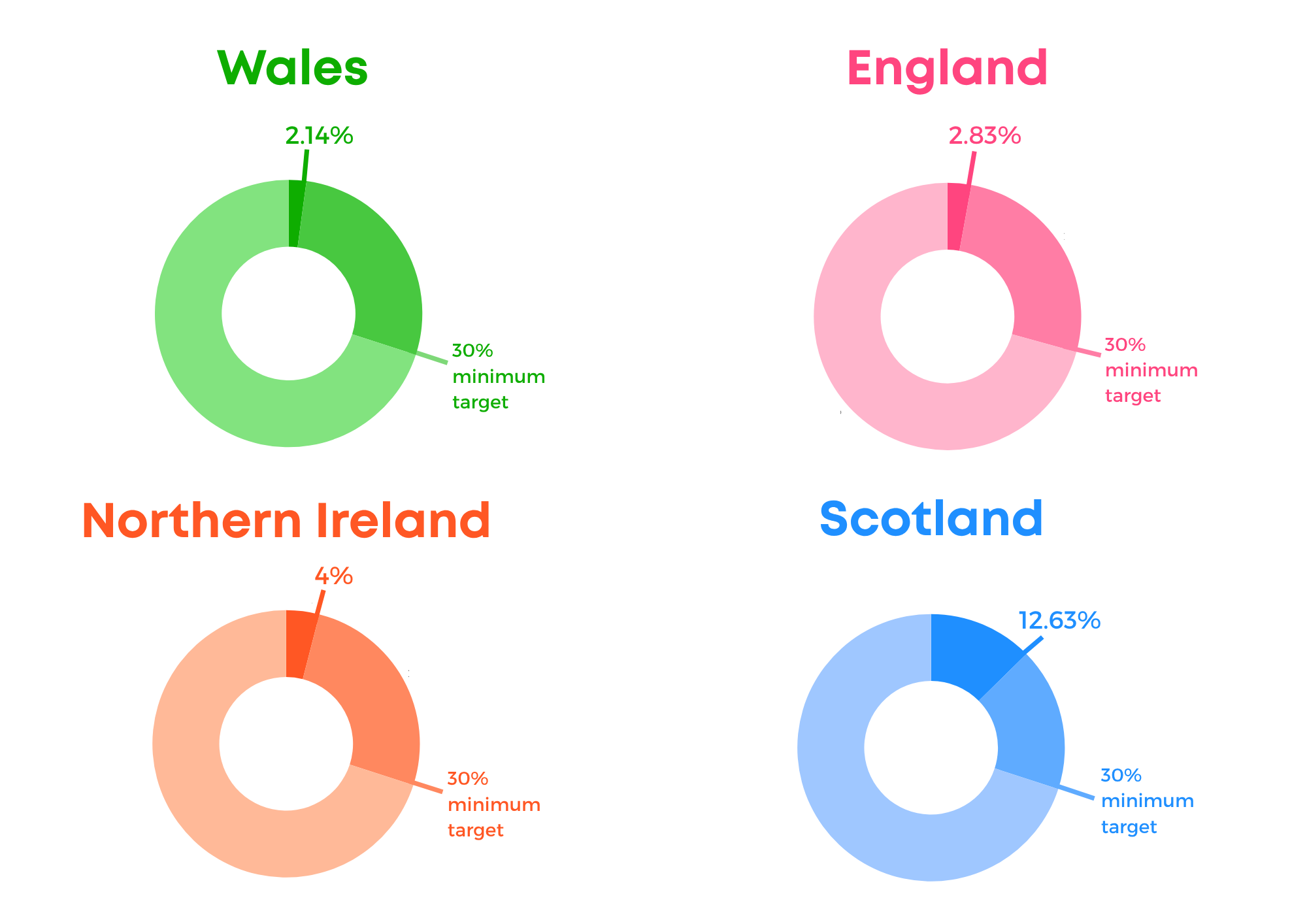
Source: 30by30, 2025 UK Progress Report, Wildlife and Countryside Link
Mainstreaming biodiversity will be key
The GBF requires integration of biodiversity in decision-making at every level.
The previous Welsh Government committed to embed responses to the climate and nature emergencies across government, and established a Biodiversity Taskforce to facilitate this. However, scrutiny by the CCEI Committee highlighted that biodiversity considerations were not being embedded across decision-making.
Section 6 of the Environment (Wales) Act 2016 requires public authorities to seek to maintain and enhance biodiversity and promote the resilience of ecosystems throughout all their functions, and report on compliance every three years. However Audit Wales has found implementation of this duty to be patchy.
As for the new Welsh Government, the Environment (Principles, Governance and Biodiversity Targets) (Wales) Act 2026 requires Ministers to have ‘special regard’ to environmental principles when making policy. Furthermore, the Act’s biodiversity target framework aims to drive cross-government and cross-sector action. Stakeholders will be looking to see how this develops.
The Welsh Government has announced that it is developing a Climate and Nature Action Plan intended to “establish a cross-government programme of action”.
Funding remains an underpinning issue
Both stakeholders and governments increasingly recognise that delivering biodiversity recovery will require significantly greater investment, including from the private sector.
The previous Welsh Government consulted on principles to underpin responsible investment in nature recovery, however the CCEI Committee heard concerns about the pace of this work. The new Cabinet Minister has committed to consult “later this year” on an approach “to unlock responsible private funding to restore land and seascapes”.
Looking ahead
COP17 will provide an international backdrop against which domestic progress on biodiversity can be scrutinised. While the Welsh Government has taken important steps to align policy with the GBF, evidence suggests that achieving the framework's objectives remains a significant challenge.
Article by Dr Katy Orford, Senedd Research, Welsh Parliament