






The Senedd has powers to make laws in a range of areas. This is because responsibility for some policy areas has been devolved from the UK Parliament to the Senedd. The power of the Senedd to pass laws is often referred to as its ‘legislative competence’.
The Senedd operates under a ‘reserved powers model’. This means that it has powers to pass laws in all areas except those reserved to the UK Parliament. So, to work out what is devolved to the Senedd, we must consider:

Areas in which the Senedd can legislate
The Senedd can make laws in any area where power has been devolved to it, including many aspects of:

What is reserved?
The Government of Wales Act 2006 lists the powers reserved to the UK Parliament in Schedule 7A. These include both ‘general’ and ‘specific’ reservations, such as:
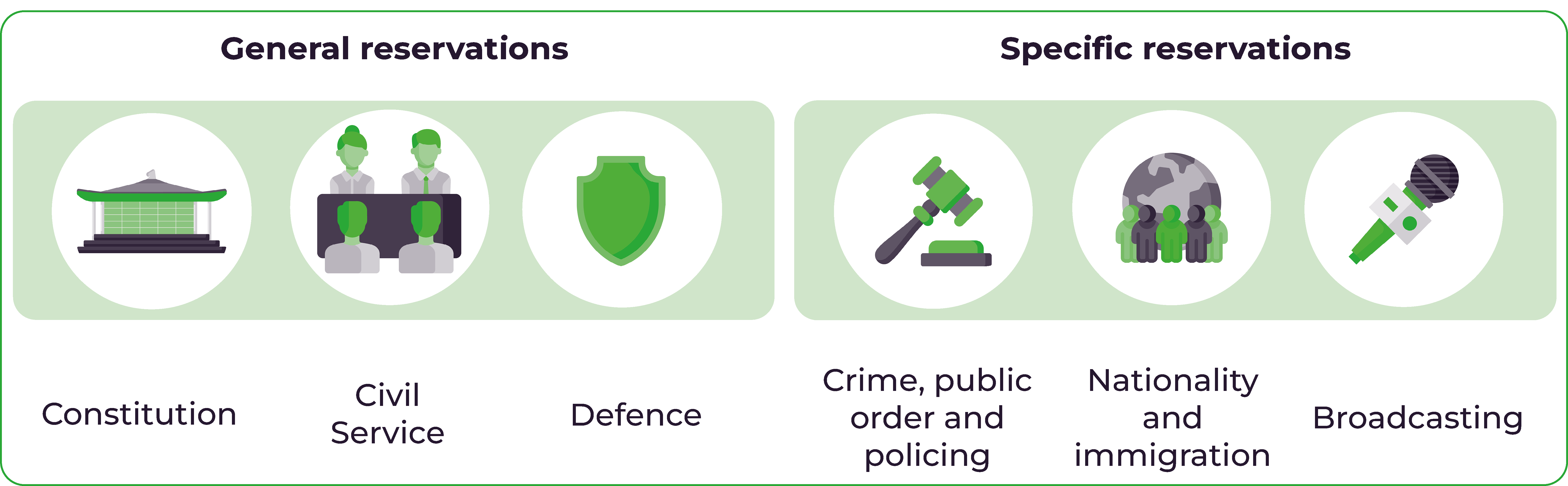
Specific reservations set out particular areas that are reserved to the UK Parliament. For example, while ‘culture’ is largely devolved, under the heading ‘media, culture and sport’, ‘broadcasting and other media’ is listed as a reservation.
Specific reservations can be broad; under the heading ‘home affairs’, ‘the prevention, detection and investigation of crime’, ‘policing’, and ‘maintenance of public order’ are listed as reserved.
Schedule 7A also sets out some exceptions to specific reservations, which mean these areas are not reserved, and therefore are devolved to the Senedd. For example, while ‘aviation’ is reserved, ‘financial assistance to providers of air transport services’ is excepted, so the Senedd has power to pass laws in this area.
Other limitations
There are other limitations on the Senedd’s ability to pass laws. Senedd legislation cannot:
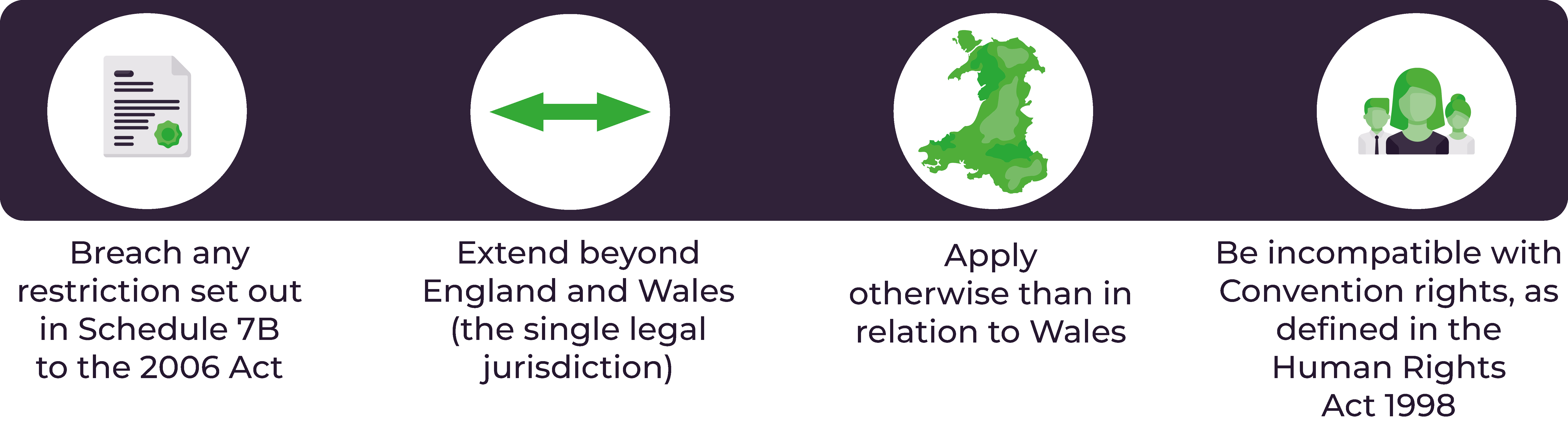
Schedule 7B to the Government of Wales Act 2006 sets out certain restrictions on Senedd legislation. For example, a Senedd Act cannot modify certain criminal law offences.
While laws passed by the Senedd can ‘extend’ to the legal jurisdiction of England and Wales, they can only apply in relation to Wales, not England or anywhere else.
There is also a list of UK Acts that are protected from modification by the Senedd, such as the UK Internal Market Act 2020. These are known as ‘protected enactments’.
Understanding what’s devolved
The reserved powers model is complex; it’s not uncommon for the Welsh and UK governments to disagree regarding whether specific areas are devolved or reserved.
After the Senedd passes a Bill, the law officers (the Counsel General in the Welsh Government and Attorney General in the UK Government) can refer it to the Supreme Court to decide whether it’s within the Senedd’s legislative competence. They must refer a Bill before it is submitted for Royal Assent, which is the final stage of the legislative process. The Supreme Court has the final say on whether the Senedd has the legislative competence to pass the provisions in question.
UK Government and Parliament powers
The UK Government can stop a Senedd Bill from becoming law if it believes it:
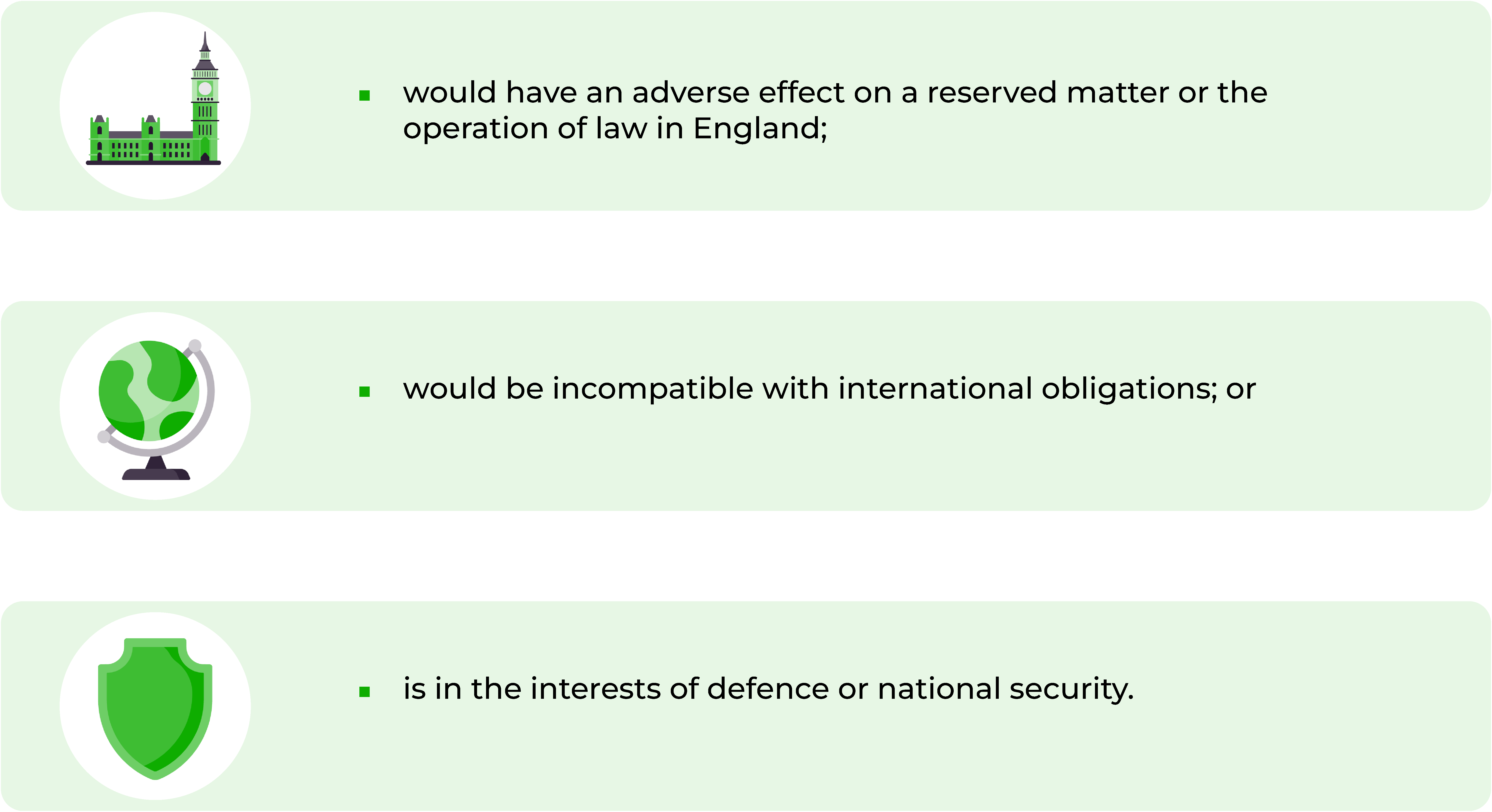
The use of these powers to stop a Bill becoming law can be challenged in the courts.
While powers have been devolved to Wales, the UK Parliament is still able to legislate in these devolved areas. Although, the Sewel Convention says it will not normally do so without the Senedd’s consent.
Note: This article summarises the main aspects of the Senedd’s legislative competence tests and does not set out all the detail of the tests in the Government of Wales Act 2006. It also does not cover executive powers of Welsh Ministers, which differ to the Senedd’s powers in some areas.