








The UK Government and the EU have been negotiating initiatives to improve youth mobility, including a youth experience scheme (YES), under their 2025 ‘Common Understanding’ agreement. Talks were intended to conclude at the UK-EU Summit on 22 July.
The summit was postponed after the resignation of Prime Minister, Keir Starmer MP, though negotiations are believed to be on-going. In a call between the new Prime Minister, Andy Burnham MP, and the President of the European Commission, Ursula von der Leyen, it was “agreed their teams should work closely towards a UK-EU Summit later in the year”.
This article takes stock of the progress made against the youth mobility commitments in Common Understanding and looks at what developments mean for Wales and its international learning exchange programme, Taith.
New commitments agreed in 2025
In May 2025, the UK and the EU announced Common Understanding, a new agreement covering the five following areas:
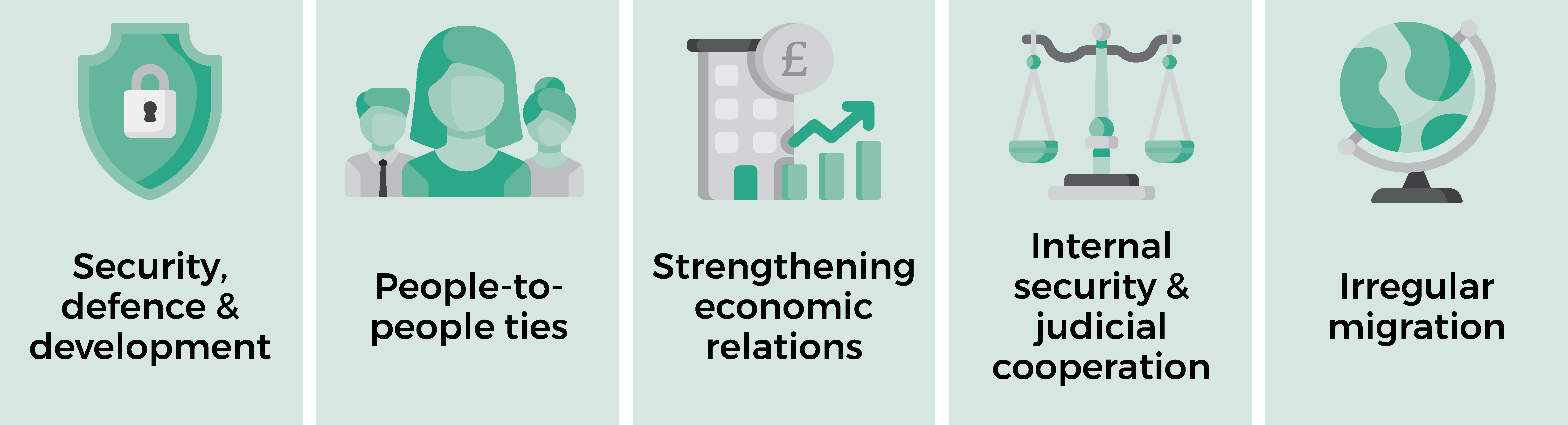
Common Understanding contains commitments to:
- work towards a balanced youth experience scheme; and
- work towards the association of the UK to the EU’s Erasmus+ programme.
Both of these have been long-standing issues in UK-EU relations. For further information on past developments, see our previous article on UK-EU youth mobility.
Progress on Erasmus+
The UK and the EU announced the UK’s association with the Erasmus+ programme in December 2025. This extends to the 2027/28 academic year, after which the UK’s continued association will have to be renegotiated because the Erasmus+ programme operates under the EU’s Multiannual Financial Framework. This is the EU’s seven-year spending plan, with the 2028-34 plan currently being negotiated.
In December 2025, former Minister for the Cabinet Office, Nick Thomas-Symonds MP, said there “will be a review of the UK’s participation in the programme 10 months after our association” and continued participation “will be informed by that data and our experience of association in 2027”.
The previous Welsh Government listed association with Erasmus+ as one of its key priorities. The former Cabinet Secretary for Economy, Energy and Planning, Rebecca Evans MS, said the Welsh Government was “pleased with the results around Erasmus+, but we want to see progress now on a youth experience scheme”.
Progress slows on youth experience scheme (YES)
In comparison with Erasmus+, negotiations around a YES have faced greater difficulty. Compared to the structured educational programme provided by Erasmus+, a YES usually refers to a flexible scheme which allows young people to travel and work abroad. This has made negotiations more complex, with both parties reportedly rejecting key asks.
The EU wanted to negotiate EU students paying domestic fees at UK universities, which are lower than international fees, as was the case before Brexit. The 2020/21 academic year was the final year that EU students who started a degree were eligible for UK home student fees and financial support. There has since been a 58% drop in EU students from 2020/21 to 2024/25. More information can be found on our article on higher education finance.
The UK has been pursuing a cap on the number of EU nationals eligible to take part in a scheme. The UK already has youth experience schemes with 13 other countries, allowing those with the relevant visas to come to the UK for up to two years. These schemes also have an annual quota for visas issued. Nick Thomas- Symonds MP previously stated the EU scheme “should be in line with the UK’s existing schemes”.
Another issue, highlighted by Professor Catherine Barnard and Denzil Davidson, is that the EU itself does not have power over the admission of third-country nationals to work in the EU. This power rests with the Member States. The EU has powers to reach agreements on youth exchanges for study, research, training and voluntary service pupil exchanges but not work. Professor Barnard and Denzil Davidson argue this could create difficulties for the EU in delivering and implementing a youth experience scheme which fulfils the commitment in Common Understanding.
Existing youth mobility schemes
After the Brexit vote and the UK’s exit from Erasmus+, the UK and Welsh governments established youth mobility schemes, Turing and Taith respectively. Both schemes support international mobility and exchange around the world, and not only in the EU, but operate differently in terms of delivery and structure.
In light of the UK’s post-Brexit association to Erasmus+, the UK Government announced that “the Turing Scheme will not be operating in the 2027 to 2028 academic year, when Erasmus+ placements begin”.
Taith funding was extended until 2028 by the previous Welsh Government but the last projects under the programme will take place between September 2026 and August 2027. The new Welsh Government has said only that it is “considering future options” for the programme.
You can read further details on the schemes below.
In 2021, the UK Government launched the Turing Scheme, which funds universities, colleges and schools in the UK and British Overseas Territories to provide international placements for students.
The Welsh Government launched its international learning exchange programme, Taith, in 2022. Taith offers exchange opportunities across adult education, further and higher education, schools and youth work and aims to “improve access for people from underrepresented groups”.
Susana Galván Hernández, Executive Director of Taith spoke to the Sixth Senedd’s committee with responsibility for international relations about the implications of rejoining Erasmus+ and Taith’s success in comparison to Erasmus+ in Wales. She said:
the number of Welsh organisations applying for Taith funding has been much, much higher than they ever were for Erasmus. So, my biggest nightmare at the moment is that we go back to Erasmus […] but the learnings from Taith are lost completely.An interim evaluation of Taith said that it:
- is predicted to deliver considerably more exchanges than Erasmus+ delivered in Wales over a comparable period;
- has performed particularly strongly in engaging youth participants when compared with Erasmus+, demonstrating the programme’s success in engaging lesser experienced and non-formal education sectors; and
- has succeeded to engage a positive number of organisations, demonstrated by the fact that it has been oversubscribed and received applications from a substantially larger pool of organisations relative to Erasmus+ over a comparable period.
With Erasmus+ participation secured and a prospective YES, the new Welsh Government will need to consider the role of Taith, or a possible successor programme, in creating international opportunities for young people.
What next for youth mobility in Wales?
Recent developments in UK-EU talks have marked a significant shift in the UK’s post-Brexit approach to youth mobility and educational exchange, although the exact nature of these initiatives have not yet taken shape.
There are still important questions to be answered on the future of a Wales-specific programme. With the last funding call under Taith issued, the new Welsh Government will need to take early decisions as it looks to bring forward its draft budget proposals for 2027-28 in the autumn.
These could include whether to continue funding Taith or a successor programme, how any Welsh scheme will complement a new UK-EU scheme and how to ensure the important learning gained from Taith is harnessed and reflected in this new landscape.
Article by Maddy Phillips, Senedd Research, Welsh Parliament