








On 1 October 2026, the minimum unit price for alcohol in Wales will rise from 50p to 65p per unit.
Minimum unit pricing was introduced by the Public Health (Minimum Price for Alcohol) (Wales) Act 2018 and came into force in March 2020, just as the Covid-19 pandemic struck.
The Act included a sunset clause and was due to end in March 2026. In February 2026, the previous Senedd voted to continue the policy and increase the minimum price. Modelling commissioned by the previous Welsh Government estimates this could lead to 628 fewer deaths as a consequence of alcohol misuse over 20 years.
Minimum unit pricing sets the lowest price at which alcohol can be sold, making it less affordable. It is particularly intended to reduce consumption of cheap, strong alcohol. The Act was targeted at helping hazardous and harmful drinkers, those who drink more than 14 units of alcohol a week, and at reducing alcohol-related hospital admissions and deaths.
However, the policy was first implemented at a time of upheaval in drinking habits, as pubs closed during the pandemic, followed by several years of rapidly rising prices caused by inflation. This complex context has made it difficult to assess the impact minimum unit pricing has had so far.
With minimum unit pricing for alcohol continuing, this article explores the evidence on the effect it has had on drinking in Wales and asks what the new Welsh Government’s next steps might be to prevent alcohol-related harm.
Minimum unit pricing sets a baseline price for alcohol in Wales and makes it an offence for alcohol to be sold below that price.
The price at which alcohol can be sold is set using the formula:
|
Minimum Unit Price x strength (% Alcohol by Volume) x volume (litres) |
The minimum unit price was initially set at 50p per unit. From October 2026 it will rise to 65p per unit.
Minimum unit pricing for alcohol was also introduced in Scotland in 2018, and the Scottish Parliament voted to continue and raise the price from 50p to 65p per unit in April 2024. It is not in effect in any of the other UK nations.
A ‘messy’ picture: evaluating minimum unit pricing for alcohol
The Welsh Government commissioned independent researchers to undertake an evaluation of minimum unit pricing for alcohol and its final reports were published in January 2025.
It found that implementation has been “smooth and effective” with a high level of compliance by retailers and that there is some indicative evidence that overall, Welsh consumption of alcohol reduced after the implementation of minimum unit pricing.
However, the reports also stress the “messiness” of evaluating minimum unit pricing for alcohol:
The period of implementation of MPA, and the subsequent evaluation has seen factors that have contributed to this messiness, including austerity, changes in excise duty, cost of living crisis, COVID-19, cross border shopping opportunities, industry actors, inflation, and the limits of devolution (e.g., on alcohol marketing and licensing).
Alcohol Change UK say that “by far the biggest change” has been to the price of cheap, strong white ciders. The price of a three-litre bottle of white cider has risen from £3.99 to at least £11.25, making it “unsaleable”. As a result, bottles have disappeared from shop shelves, which they describe as “a significant harm reduction measure.”
Alcohol related deaths and hospital admissions
The rate of deaths as a direct consequence of alcohol misuse is higher in Wales now than before the introduction of minimum unit pricing in 2020. The number of deaths hit a new high in 2023 when 562 people died, a rate of 17.7 deaths per 100,000 people.
The causes of this rise are likely complex. Researchers have identified a similar pattern in England, in part caused by increased alcohol consumption by heavier drinkers during the Covid-19 pandemic.
Age-standardised alcohol-specific death rates per 100,000 people in Wales; deaths registered between 2001 and 2024
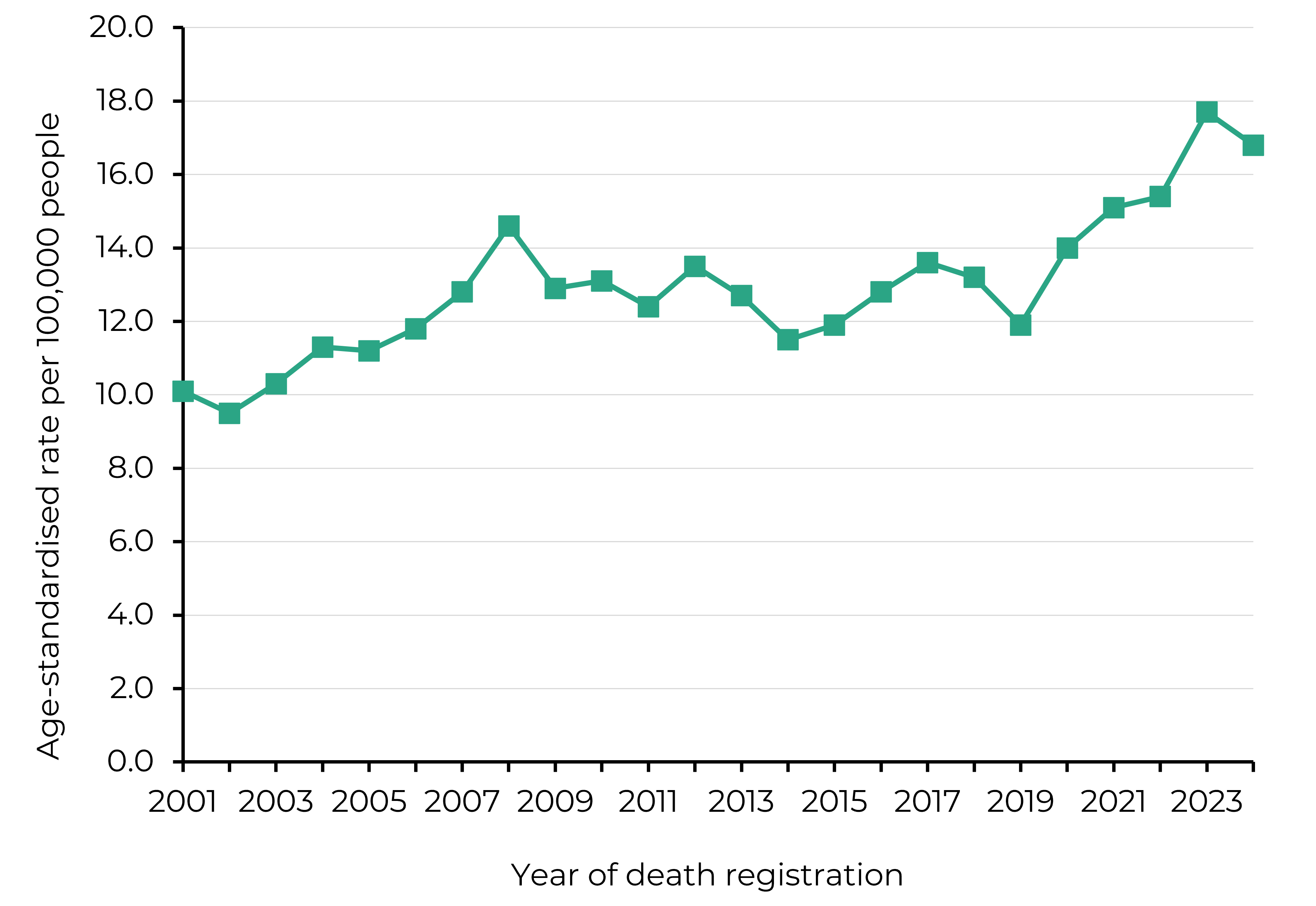
Source: Alcohol-specific deaths in the UK: registered in 2024, Office for National Statistics
Meanwhile, the rate of hospital admissions with alcohol-attributable conditions, fell substantially in 2020, likely due to the Covid-19 pandemic, and has since settled at a lower level after the introduction of minimum alcohol pricing.
Hospital Admission rates due to Alcohol specific and Attributable Conditions in Wales, 2015/16 to 2024/25
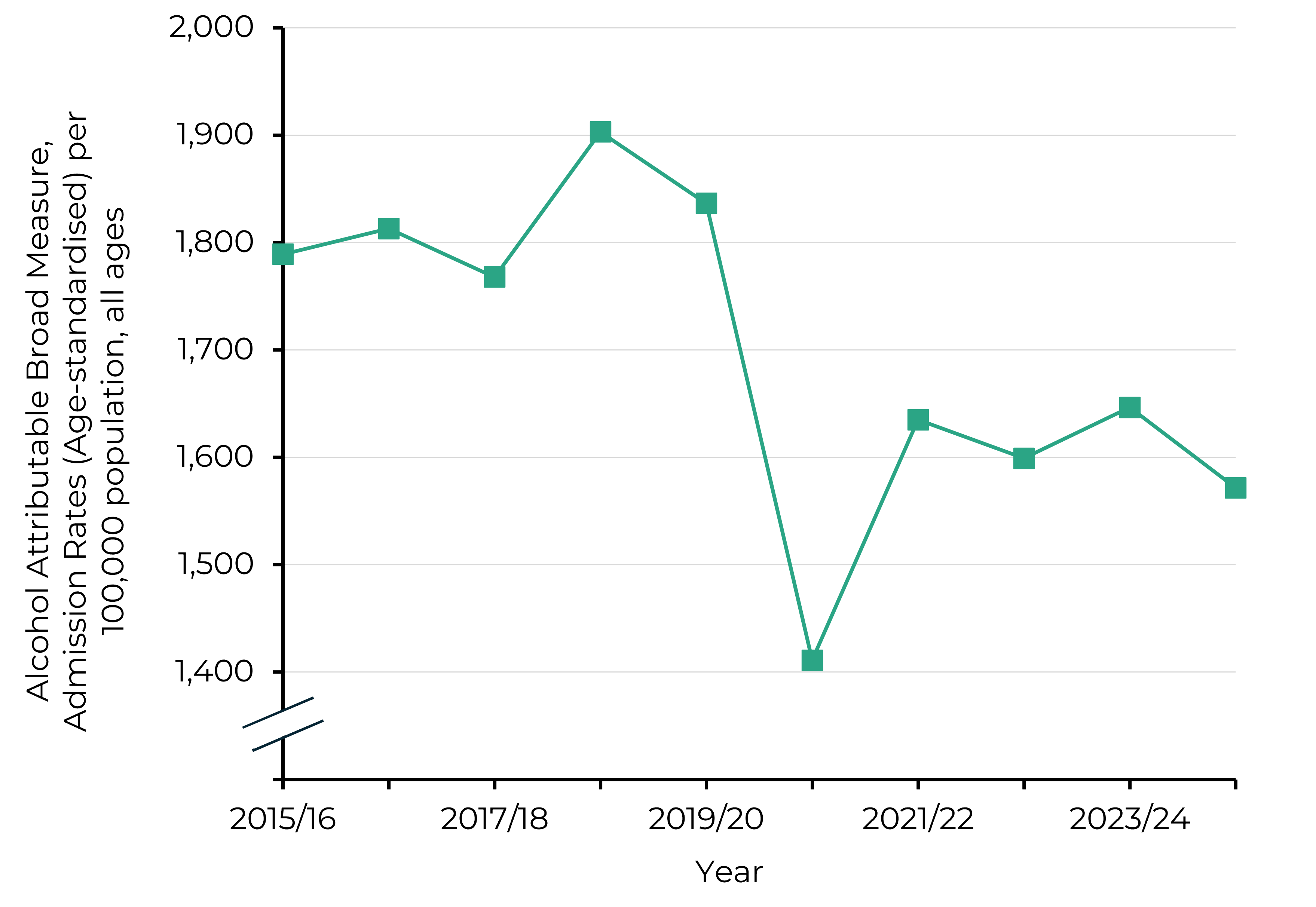
Source: Alcohol Attributable Broad Measure, Admission Rates (Age-standardised) per 100k pop, Persons, All Ages, Digital Health and Care Wales
These key measures of alcohol-related harm do not provide a clear picture of the impact of minimum alcohol pricing, reflecting the challenge of understanding its effects.
What next for minimum pricing for alcohol in Wales?
The timeline below shows key developments since 2022:
Figure 1 – Timeline of developments in minimum unit pricing since 2022
Click on the arrows to see the milestones
April 2024
Scottish Parliament votes to continue minimum unit pricing in Scotland and increase the minimum unit price to 65p
With a new Welsh Government now in place, there are questions about what comes next.
How will the new Welsh Government continue to monitor and evaluate the effect of minimum unit pricing for alcohol?
The previous Welsh Government agreed to continue monitoring the impact of the policy. The new Government will now decide whether to continue this work and, if so, what form the ongoing evaluation will take.
The 6th Senedd Health and Social Care Committee called for future research to consider the impact of the policy on dependent drinkers on low incomes and children and young people.
Will the new Welsh Government review the minimum unit price?
As prices continue to rise with inflation, the new minimum unit price will become less effective. The previous Welsh Government did not commit to introducing a review mechanism for the minimum unit price, but said they would like to “explore the viability and potential benefits” of doing so.
The new Government will need to determine whether the minimum unit price should be reviewed again in future.
How will the new Welsh Government tackle alcohol-related harm?
Alcohol misuse remains a significant public health concern and a driver of health inequalities. Public Health Wales say that NHS Wales spends £159 million each year on alcohol-related illness and the most severe health consequences from alcohol occur in more deprived communities.
Wales had a Substance Misuse Strategy from 2008 to 2018, followed by a Substance Misuse Delivery Plan from 2019 to 2022. The 6th Senedd Health and Social Care Committee called for an updated substance misuse strategy to complement minimum unit pricing as part of a whole-system approach to tackling alcohol-related harm.
The new Government has made prevention and addressing the wider determinants of poor health a priority, with it falling under the responsibilities of both the Cabinet Minister for Health and Care and the new Deputy Minister for Public and Preventative Health.
The Government will need to decide whether additional action is needed to address the harms caused by alcohol and whether this should include an updated substance misuse strategy.
Article by Angharad Lewis, Senedd Research, Welsh Parliament