








For some people, inequality means starting school already behind their peers, facing insecure work and lower pay in adulthood or struggling with poor health in later life. These inequalities are often compounded by simply belonging to a protected characteristic. How do policy makers ensure people’s futures are not determined by structural inequalities and poverty?
This article provides a snapshot of equality and poverty in Wales and highlights policy interventions that have been taken or proposed to address these issues.
Predicting the future: inequality in childhood
Inequality begins early and can last for a lifetime.
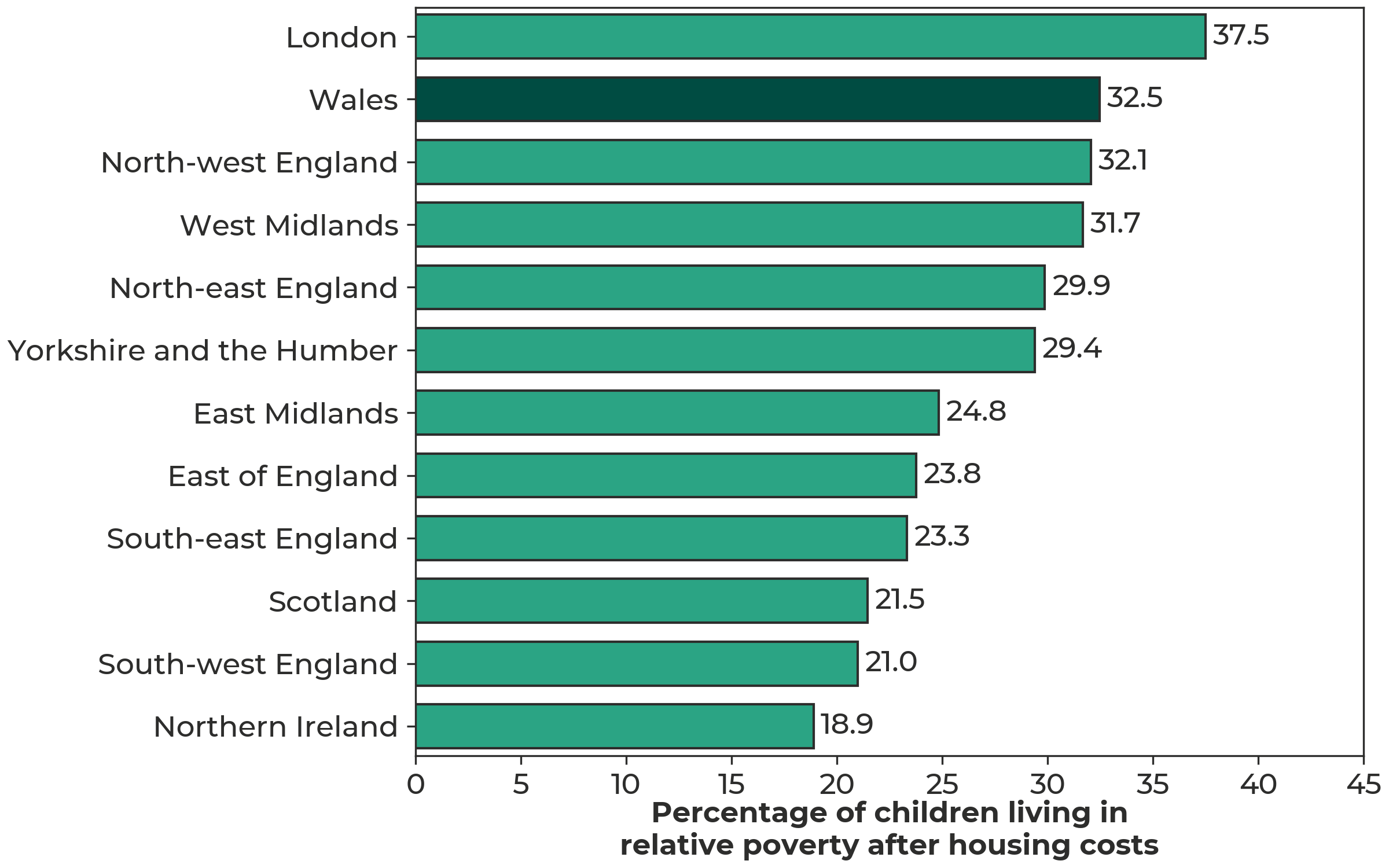
Since the start of devolution, children have been the most likely age group to live in poverty, with nearly a third of Welsh children currently living in poverty. Children in some demographic groups are particularly likely to live in poverty. These include children in larger families, children in lone-parent families, children who live in a household where someone is disabled, and children who live in a non-working household.
Figure 1: Percentage of children living in relative poverty after housing costs for devolved nations and English regions, 2022-23 to 2024-25
Source: Department for Work and Pensions, Households Below Average Income: for financial years ending 1995 to 2025 (data used is for 2022-23 to 2024-25)
Evidence shows child poverty impacts a child’s future outcomes in terms of educational attainment, health, employment, and whether they are likely to experience poverty as an adult.
Children in Wales face a complex range of inequalities, including:
- Babies from Black and Asian ethnic groups continue to have the highest infant mortality rates.
- More than 1 in every 100 children in Wales is in care and there’s a link between poverty and rising care rates. Poverty is a key driver of harm to children, including child abuse and neglect.
- Nearly 60% of secondary school children eligible for free school meals were persistently absent from school in 2024/25.
- Girls tend to achieve better educational outcomes than boys, both for GCSEs and A-Levels.
- Girls are more likely to have poor mental wellbeing than boys, and to report feelings of low mood, irritability, nervousness, or trouble getting to sleep.
Public Health Wales highlights that government interventions have the greatest impact in the first 1,000 days – from conception to second birthday. It says cost-effective policies, that have been shown to deliver net benefits or a return on investment, include universal childcare and paid parental leave for vulnerable families.
Some interventions, for example most social security benefits, are delivered by the UK Government. However, there are policy options available to the Welsh Government. The Bevan Foundation has called for it to adopt a cross government strategic approach to child poverty, with joined-up actions in relation to housing, education and employment.
The Scottish Child Payment has been widely talked about as an effective approach to reduce child poverty. The Scottish Government estimates it will keep 40,000 Scottish children out of poverty in 2025-26. Policy in Practice found that developing a similar payment in Wales would be more impactful than alternative approaches to reducing child poverty. However, there are questions about how the Welsh Government could introduce a similar payment within its powers, and how it would be funded.
Adulthood: the gap widens
Inequality in adulthood often reflects the accumulation of earlier disadvantage, but it can also be shaped by personal characteristics:
- In England and Wales an estimated 2.2 million females (9.1%) and 1.5 million males (6.5%) experienced domestic abuse in the year ending March 2025.
- 6,213 hate crimes were reported in Wales in the year ending March 2025, of which, 3,911 were racially motivated and 739 motivated by disability.
- People in the Black, Black Welsh, Black British, Caribbean, or African ethnic groups are the least likely to own their own home, and most likely to have fewer bedrooms than their household requires.
- Based on the average pay for women and men in 2025, renting is only affordable (as defined by Wales Women’s Budget Group) for women in 5 of the 22 local authorities (LAs) in Wales, compared to men where only 1 local authority (Cardiff) is unaffordable.
- 27% of people aged 60+ feel as though they have been treated differently because of their age.
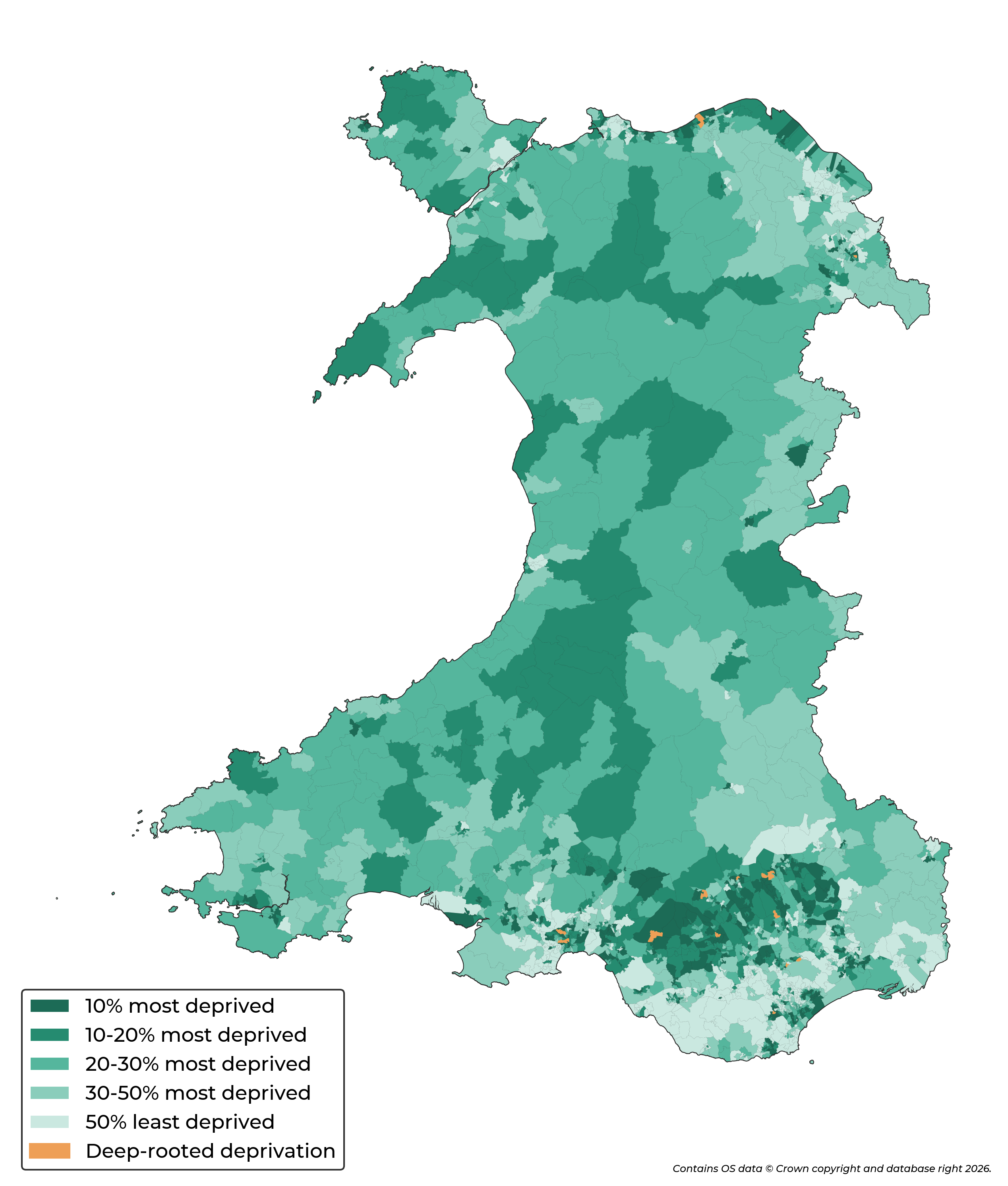
Where you live also matters. The Building Communities Trust has highlighted "sustained, place-based inequality throughout the nation”. The Welsh Index of Multiple Deprivation shows “pockets of high relative deprivation in the South Wales cities and valleys, various coastal towns, and some towns in North East Wales”. There are 22 areas in Wales in deep-rooted deprivation (out of 1,917 areas), meaning they have consistently been in the most deprived 50 small areas of Wales for the last 20 years.
Figure 2: Map showing deprivation ranks for small areas in the Welsh Index of Multiple Deprivation 2025
Source: Welsh Government, Welsh Index of Multiple Deprivation: 2025 Work can play a key role as a route out of poverty. However, Wales’ employment rate is lower than the UK overall, and within Wales a number of demographic groups face inequalities related to employment.
Disabled people face particular challenges in accessing employment, and have an employment rate that is 29 percentage points lower than non-disabled people. The previous Welsh Government was working towards developing new employability support programmes to start in 2027. The UK Government’s commitment to devolve non-Jobcentre Plus employment support funding to Wales (initially transferring up to £20m for the Economic Inactivity Trailblazer pilots) also provides an opportunity for the new Welsh Government to adopt a different approach to support people into work.
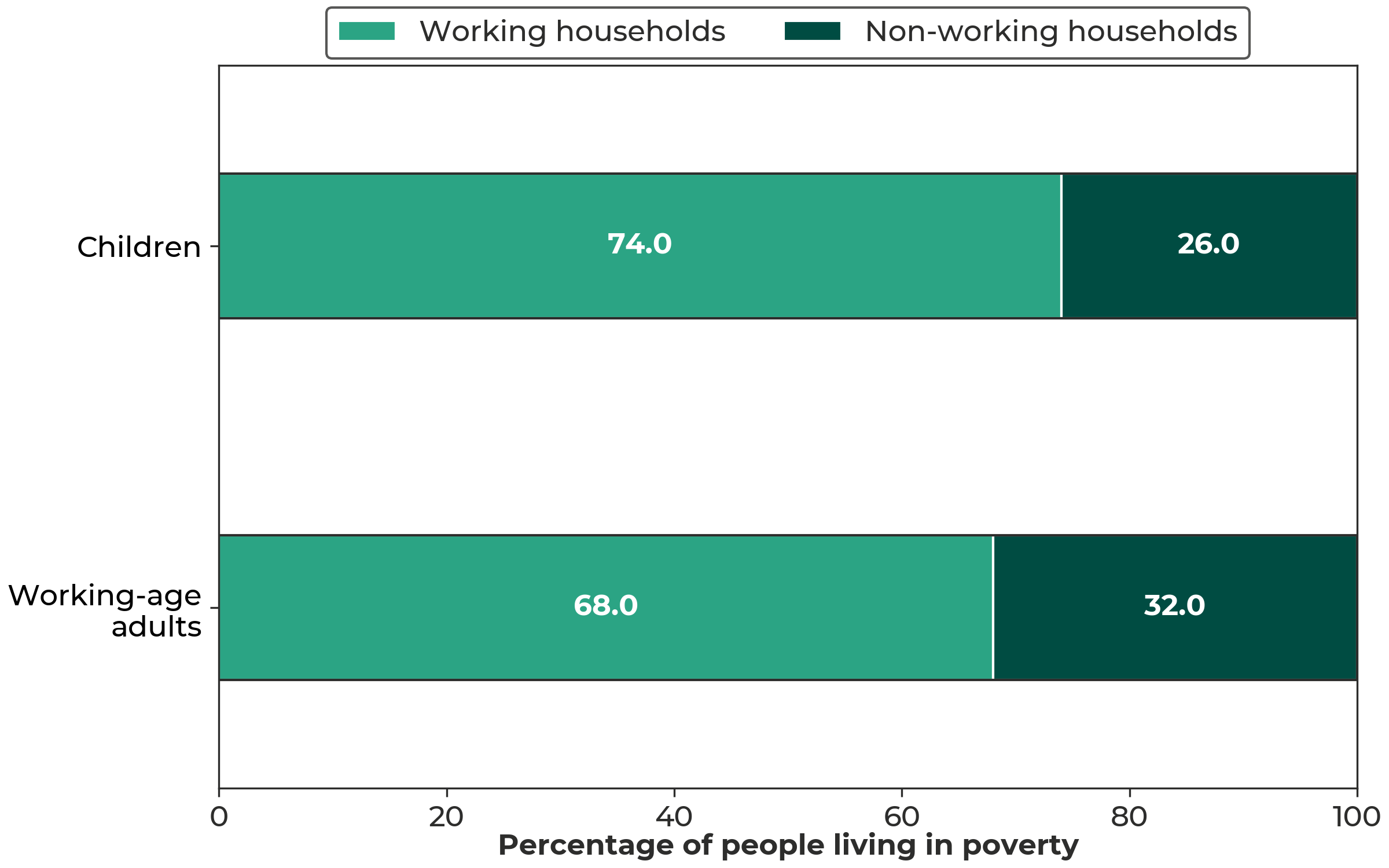
Even when people are able to access work, it isn’t always a route out of poverty. Almost 75% of children and 70% of working-age adults who live in relative poverty live in a working household.
Figure 3: Percentage of children and working-age adults in poverty, by economic status of household, 2022-23 to 2024-25
Source: Welsh Government, Children in relative income poverty by economic status of household and Working age adults in relative income poverty by economic status of household
The previous Welsh Government implemented policies in relation to fair work and promoted payment of the Living Wage. However, certain groups such as women, disabled people, and some ethnic minority groups face persistent pay gaps, with the previous Welsh Government committing to eradicating these by 2050.
The UK Government also has a role to play in improving employment conditions and has legislated through the Employment Rights Act. It also has a role in reducing pay gaps, and legislation requires large employers to report on gender pay gaps each year. It has also consulted on mandatory ethnicity and disability pay gap reporting.
Ageing well: inequality in later life
Average life expectancy in Wales is lower than England but higher than Scotland. Where you live in Wales also matters, with life expectancy rates varying for both males and females by local authority.
Between 2022 and 2024, Wales had a larger decrease in healthy life expectancy (the number of years on average lived in good general health) than England and Scotland. Healthy life expectancy (HLE) across Wales is at its lowest since 2010, with Wales having the lowest HLE rate for females (58.5 years) in the UK.
Nearly 1 in 6 older people in Wales live in relative income poverty. More older women are living in poverty. Older women also face lower retirement incomes due to interrupted employment linked to caring responsibilities and unpaid care.
Social isolation and loneliness can impact on HLE, with an estimated 91,000 older people in Wales feeling ‘consistently’ lonely. The quality of housing, combined with lower income, can exacerbate health conditions, with rates of fuel poverty in Wales increasing as people get older.
When considering actions to tackle inequalities, a new Welsh Government will need to consider that outcomes in older life are often shaped by earlier circumstances and reflect the cumulative impact of inequalities experienced across the course of someone’s life.
Opportunities to reshape people’s lives
Understanding how disadvantage and inequalities develop over time is important when designing policies that go beyond simply addressing the symptoms rather than the cause. The previous Welsh Government took a number of steps to tackle inequality and poverty, committing to national wellbeing indicators and milestones, publishing action plans on gender, race, disability and a strategy on violence against women and domestic abuse. Despite efforts, inequalities and poverty continue to shape the outcomes for many of those living in Wales.
Article by Claire Thomas and Gareth Thomas, Senedd Research, Welsh Parliament