








The Welsh economy faces long‑standing structural challenges such as productivity, income and skills gaps, along with regional inequalities. Against an uncertain global backdrop, how might the new Welsh Government look to address these?
Professor Kevin Morgan of Cardiff University argues Wales is approaching “the anniversary from hell… a century of relative economic decline”. Employment rates are higher, and unemployment and economic inactivity rates are lower than at the start of devolution. However, persistent gaps between Wales and other parts of the UK remain in relation to growth, productivity, skills, and regional inequalities.
Long-term growth challenges
|
The Office for National Statistics (ONS) describes Gross Domestic Product (GDP) as the main measure of ”economic growth based on the value of goods and services produced during a given period”. |
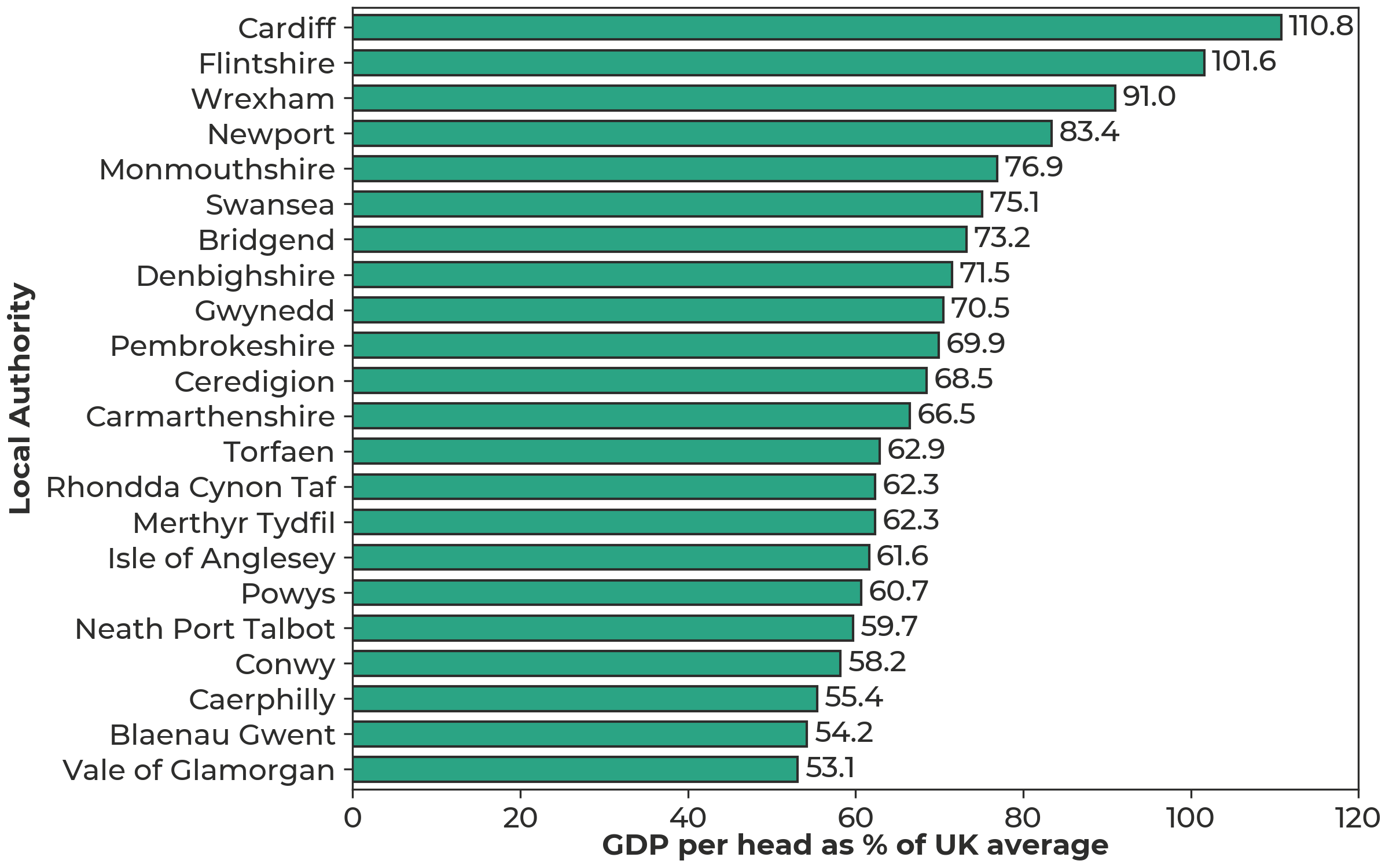
Welsh GDP per head has been around 75% of the UK average since the start of devolution. The latest figures put Wales below all English regions, except for North-east England, and below the other devolved nations. One of the key factors causing this is lower productivity levels compared to other parts of the UK. London and South-east England particularly benefit from ‘agglomeration effects’ associated with higher firm and population density.
There are also long-standing regional economic inequalities within Wales.
Figure 1: Gross Domestic Product per head as % of the UK average, 1999-2023
Source: Office for National Statistics, Regional economic activity by gross domestic product, UK: 1998 to 2023
Figure 2: GDP per head as % of the UK average for Welsh local authorities, 2023
Source: Office for National Statistics, Regional economic activity by gross domestic product, UK: 1998 to 2023
The UK Government says economic growth is its “number one mission”, and is key for enabling investment in public services and raising living standards.
To anchor growth and inward investment, The Confederation of Business Industry (CBI) Wales wants a “more predictable, pro-enterprise environment”.
the Federation of Small Businesses (FSB) Wales calls for a new economic strategy centred on growing Welsh businesses, along with an economic development agency.
The United Nations Secretary-General has called for a move away from focusing on GDP, suggesting this does not sufficiently consider sustainability. He advocates “an economic system that gives value to what counts – human wellbeing”.
The previous Welsh Government developed a dashboard for assessing performance against eight key economic indicators, and developed wider indicators to measure Wales’ progress against seven well-being goals, including ‘A prosperous Wales’. The Institute of Welsh Affairs suggest that, while growth is important, what matters more is the kind of growth that is achieved and “how this can be felt in the lives of people in Wales”. They argue the next Welsh Government will be more easily able to improve wellbeing with its policy levers than drive growth, and should prioritise outcomes that maximise wellbeing.
Lagging productivity and stagnating living standards
|
Productivity is defined by the ONS as “the relationship between inputs and outputs in the economy: the fewer inputs used to produce the same quantity of outputs, the more productive we consider that process”. |
The UK has faced a ‘productivity puzzle’ with productivity growth unexpectedly slow since the 2008 financial crisis. The Wales Productivity Forum highlights Wales faces an additional challenge, with a longstanding gap between Welsh and UK productivity levels, and no evidence of this changing over time.
Figure 3: Productivity per hour worked as % of UK average, 1999 to 2023
Source: Office for National Statistics, Regional and subregional labour productivity, UK: 2023
Note: The Office for National Statistics has highlighted a number of factors that may make the data for 2023 more volatile than usual, particularly for smaller areas for which productivity data is typically more volatile.
Emeritus Professor Andrew Henley of Cardiff University says Wales “lags well behind other UK regions and nations outside London and the South East” in relation to innovation and investment, and should prioritise boosting productivity in these areas.
The previous Welsh Government and UK Government developed a Local Growth Fund to increase productivity and tackle economic inequality. However, available funding is less than under previous regional development programmes, and there are concerns about the fund’s design and delivery arrangements.
While there is hope that AI will drive increased productivity, concerns remain as to the potential for wider negative consequences. For instance, Trades Union Congress (TUC) Cymru recently found 60% of Welsh workers are concerned about the impact of AI and new technologies on their job.
As well as being the primary driver of long-term economic growth, productivity is inextricably linked to living standards. As the economist Paul Krugman put it:
Productivity isn’t everything, but, in the long run, it is almost everything. A country’s ability to improve its standard of living over time depends almost entirely on its ability to raise its output per worker.
Following slow productivity growth since the financial crisis, living standards have stagnated across the UK. The National Institute of Economic and Social Research estimates UK households would be nearly £2,000 a year better off if incomes had continued to grow in line with the historic trends seen before the 2008 financial crisis.
|
The ONS describes Gross Domestic Household Income (GDHI) as the amount of money that households and people living in communal establishments have to spend or save after paying taxes and/or receiving benefits. It also includes the business income of self-employed people. |
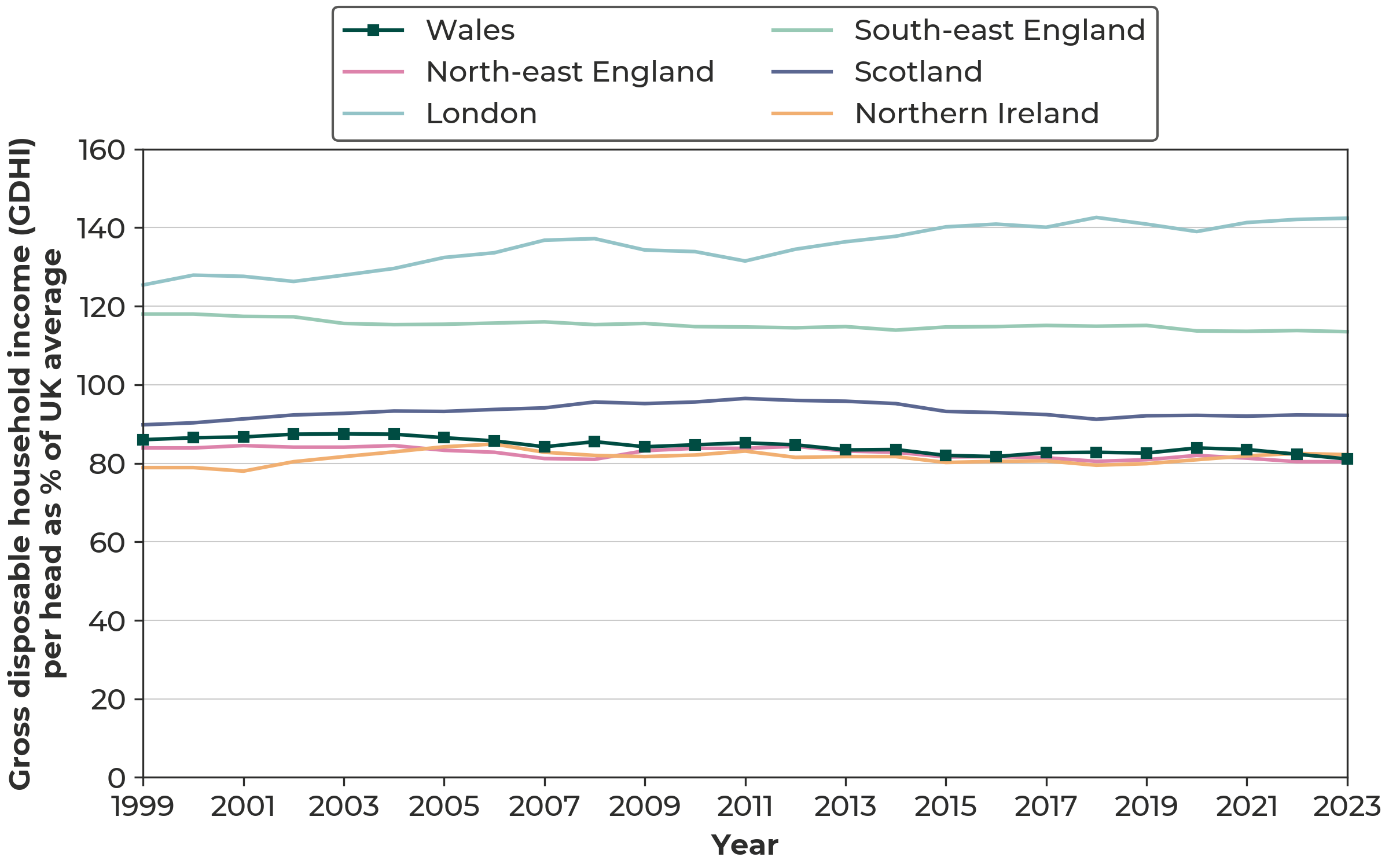
In 2023, GDHI per head in Wales was 81% of the UK average, the lowest since the start of devolution, and lower than in all parts of the UK except north-east England.
Figure 4: GDHI per head as % of the UK average, 1999 to 2023
Source: Office for National Statistics, Regional gross disposable household income, UK: 1997 to 2023
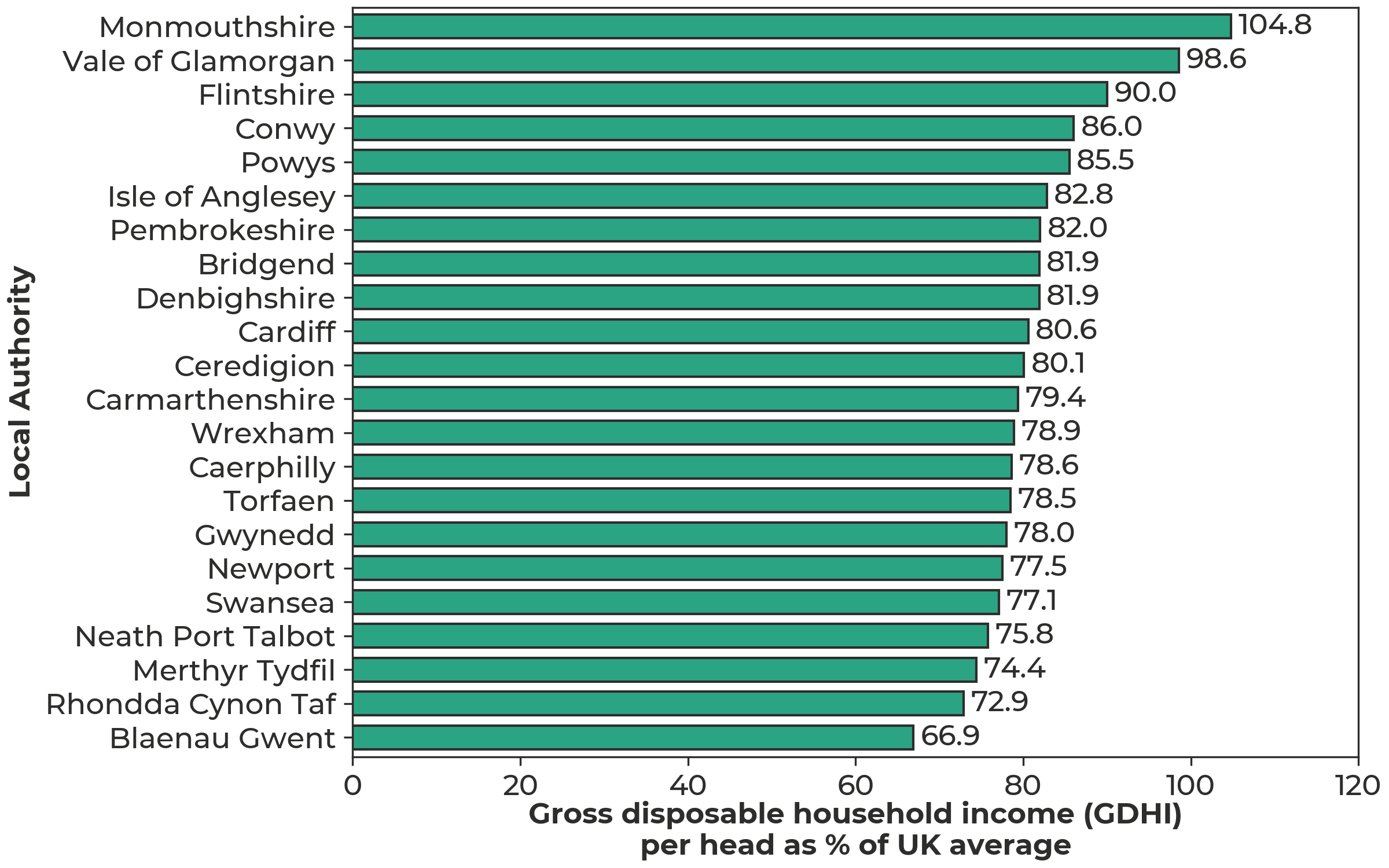
Figure 5: GDHI per head as % of UK average for Welsh local authorities, 2023
Source: Office for National Statistics, Regional gross disposable household income, UK: 1997 to 2023
Cost-of-living pressures have exacerbated the challenges many households already faced, and their effects are still being felt across Wales. The Bevan Foundation’s most recent snapshot of poverty in Wales highlighted that, in the three months to September/October 2025, almost a quarter of adults went without heating. A similar proportion had skipped meals or cut down on portion sizes.
Citizens Advice Cymru has called for the new Welsh Government to take measures to boost household incomes and tackle increased housing and energy costs. That said, many key levers lie outside the Welsh Government’s hands. The Resolution Foundation highlights the need for “consistent and stable indexation of social security benefits”, as well as measures to support wage growth.
However, there’s a gloomy forecast for the next few years, even before any potential impacts from the Iran conflict. The Office for Budget Responsibility predicts further UK living standards stagnation for the remainder of the decade.
Persistent rates of young people who are NEET and skills challenges
Wales is seeing a decrease in the number of apprentices and a drop in the proportion of 18 year olds entering university. Apprenticeship starts were down 48% in the construction sector, which is “worsening workforce shortages” in an industry that is “needed for future green skills and growth”. Universities Wales reports Wales will need 400,000 extra graduates by 2035 to meet growing skills needs.
Young people have reported uncertainty about their life’s direction and the barriers they face to access education, employment and training. At the same time, employers are often struggling to find the skills they need.
Youth unemployment in Wales has been volatile but generally declining over the last decade until an increase over the year to September 2025. The proportion of young people not in education, employment or training (NEET) in Wales remains “stubbornly and unacceptably high”, and there has been an increase over the last year. High numbers of NEETs is a UK-wide issue, which has prompted the UK Government to commission an independent inquiry into young people and work.
In 2021, the previous Welsh Government launched the Young Person’s Guarantee (YPG) aimed at preventing young people from becoming NEET. However, the then First Minister acknowledged in March 2026 there were questions about why youth unemployment and the number of NEETs are increasing when the YPG is available.
These issues raise the question of whether the training and skills system is delivering for Wales’ people, businesses and economy. Given the economic changes coming, such as AI and transitioning to a greener economy, the skills system needs to have sufficient flexibility to meet the needs of employees and businesses.
A full in-tray
With an uncertain economic future, and the possibility of a global economic shock hitting growth and living standards further, the new Welsh Government may well face short-term headwinds in addition to the pre-existing, longer-term economic challenges. Along with the UK Government, it will need to consider how to tackle these, as well as issues such as decarbonising the economy, AI and much more.
Article by Gareth Thomas and Lucy Yarham, Senedd Research, Welsh Parliament