







Welsh food and drink sector growth has generally been considered a success story, with the previous target of £7 billion sales value before 2020 being exceeded ahead of schedule.
However, against a backdrop of climate change, geopolitical factors, increasing food insecurity and concerns over declining livestock numbers and the capacity to add value to food products here in Wales, a Senedd Committee held an inquiry into food processing in 2025.
This article sets out the main issues ahead of the Senedd debate on the Economy, Trade and Rural Affairs (ETRA) Committee’s report on 11 March.

Source: Welsh Government: Economic Appraisal - Welsh Food and Drink sector (2024)
Welsh Government rejects calls for overarching food strategy, again
The Welsh Government’s Vision for the Food and Drink Industry (2021) focuses primarily on the ‘Food Foundation Sector’, which includes businesses that produce, process, manufacture and wholesale food and drink goods.
There have been calls for an overarching strategy for the whole food system because of a lack of policy alignment, including from Peter Fox MS in his Food (Wales) Bill (2022), the ETRA Committee itself (2023) when considering the Bill, and the Future Generations Commissioner (2023).
The Government resisted these calls saying it already has a strategic approach.
The Food Bill fell but the Government published Food Matters: Wales (2024), summarising food policies across portfolios. It also published a Community Food Strategy (2025), fulfilling a Programme for Government commitment.
The Committee heard mixed views on the Vision’s effectiveness. Stakeholders said while there had been economic growth, there are social and environmental shortcomings.
The Food, Farming and Countryside Commission was concerned about divergence between pre- and post-farm gate policy, saying the latter is predicated on growth whereas there’s a perception that primary food production isn’t the principal objective of the Sustainable Farming Scheme (SFS).
Stakeholders called for an overarching strategy and the Committee again made this recommendation. The Government rejected it, saying it does maintain a joined-up, whole-system approach across policies, and a further strategy would duplicate and divert from existing priorities.
Ideas to improve business support
The Welsh Government also rejected the business support recommendation.
Stakeholders were generally complimentary about Government support for food and drink businesses, but specific issues were highlighted.
There was concern about a ‘missing middle’ of medium-sized businesses in Wales. Dr Robert Bowen, Cardiff Business School, said a “cultural shift”, and support for local processing infrastructure, such as abattoirs, were needed to encourage small and micro businesses to grow.
Puffin Produce highlighted the benefit of identifying businesses with growth potential early and pointed to the success of a ‘picking winners’ approach in Ireland, saying that backing certain dairy co-operatives and meat businesses turned them into global players.
The Government mounted a robust defence of its support for the sector arguing it “provides a strategic, whole-system package of support that strengthens domestic food processing capability, and resilience”. The Government response includes a breakdown of government support schemes.
Meat processer viability depends on livestock throughput
The Welsh Government was receptive to the Committee’s views on supporting abattoirs and low carbon red meat production.
In this, and its previous Hybu Cig Cymru (Meat Promotion Wales) inquiry, the Committee heard how declining livestock numbers are resulting in reduced throughput for processors which could lead to a tipping point where Welsh abattoirs become unviable.
The UK Climate Change Committee (UKCCC) published advice to the Welsh Government on Wales’ Fourth Carbon Budget in May 2025. The pathway (from 2025 to Net Zero by 2050) assumes cattle and sheep numbers declining by 19% by 2033 compared to 2022.
The Government said livestock numbers in 2024 were already “almost at the level” suggested by the UKCCC for 2030.
The latest livestock statistics (June 2025) show:
- 8.8 million sheep and lambs, slightly higher than the 8.7 million in 2024.
- 1.08 million cattle and calves, a small fall from 1.09 million last year. The size of the beef herd fell by 5% while the dairy herd rose by 1.1%.
The Government recognises a “stable and sufficient supply of livestock is essential to the viability of the red meat and dairy processing sectors”, and:
Improving farm efficiencies and embracing scientific innovation - while stabilising numbers and maintaining the production of high-quality, sustainable food with healthier and more productive animals - is a key Welsh Government objective, with the main driver being the Sustainable Farming Scheme.
The SFS business case modelling (September 2025) estimates a decline in Grazing Livestock Units of up to 7.6% in farms participating in the SFS Universal Layer. The Cabinet Secretary for rural affairs has stressed the business case represented “scenarios, not predictions” and didn’t consider SFS Optional and Collaborative layers, which are yet to be announced.
The Cabinet Secretary has previously said the Government supports abattoirs through the Food Business Accelerator Scheme.
The Committee asked the Government to consider introducing a headage scheme, to support stocking density, similar to the Scottish Suckler Beef Support Scheme. The Government response makes no specific reference to headage support.
NFU Cymru recently published a report seeking support for Welsh suckler beef production (February 2026).
Potential to grow the horticulture sector
The Community Food Strategy aims to increase production of locally sourced food, through supporting community growing and small-scale horticulture.
The Welsh Government agreed with increasing sustainable horticulture production, but disagreed it should adopt Food Policy Alliance Cymru’s target of 75% of vegetables consumed in Wales to be produced here sustainably.
The Government argues the target may not be deliverable because of the seasonality of vegetable growing in Wales.
The Committee heard that horticulture presented an opportunity for growth but barriers included planning system complexity, limited processing infrastructure, and market access challenges.
Dr Siobhan Maderson, Aberystwyth University, said support was needed to scale up horticulture and for producers to take advantage of public procurement opportunities as different skills are required to navigate procurement systems.
Social Farms and Gardens said investment was needed in localised primary processing and storage equipment (e.g. washing, dicing, cold storage, packing), and that relatively low levels of investment in shared equipment and infrastructure would diversify primary production, processing, and distribution, and strengthen short supply chains.
The Government said it supports horticulture through grants such as the Horticulture Start Up and Agricultural Diversification and Horticulture schemes, providing advice through Farming Connect, and is working to improve planning guidance.
Desire for more Welsh seafood consumption
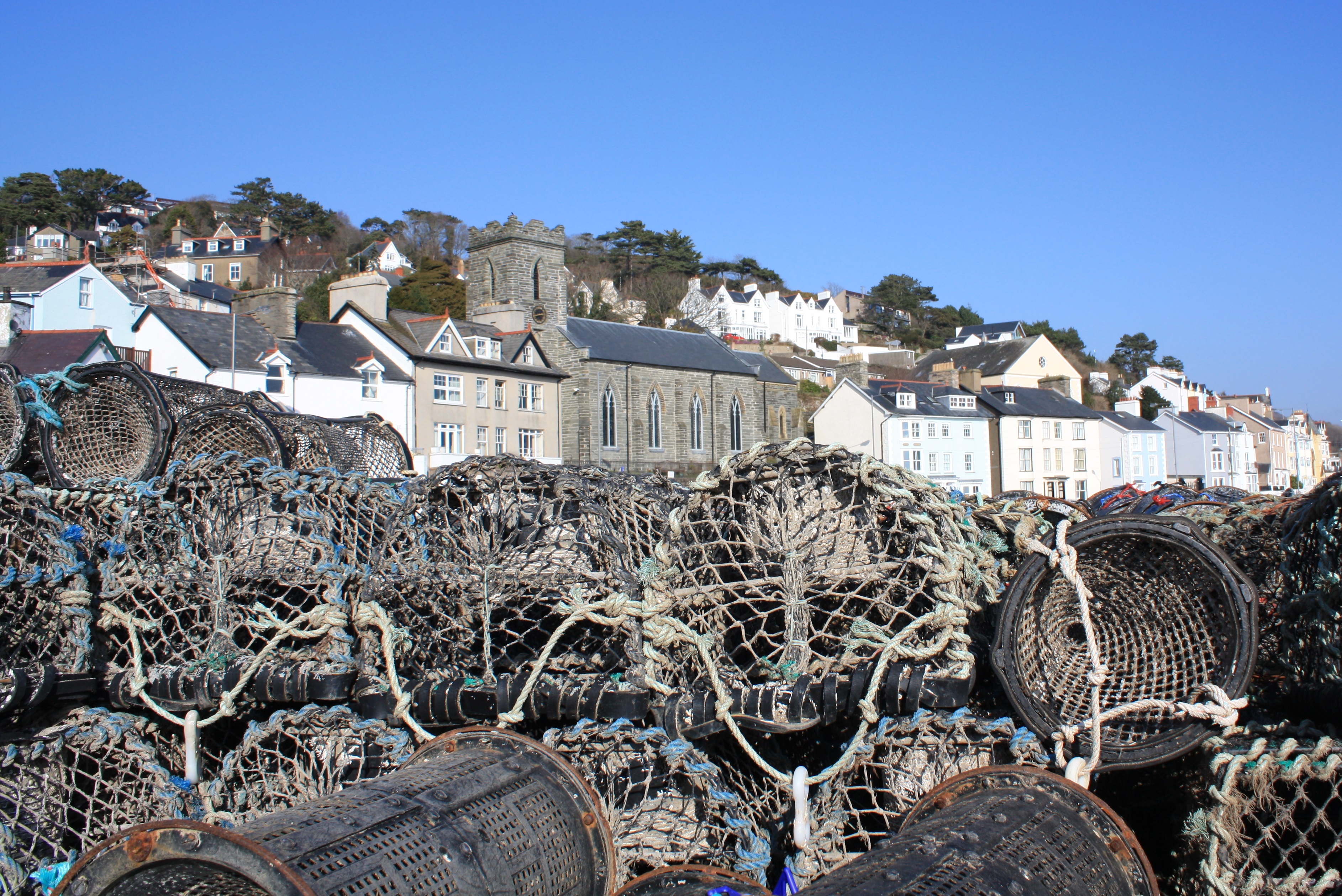
While the Committee didn’t take much evidence on seafood it was mindful Wales consumes very little of the high quality seafood caught in our waters. Indeed, former Senedd Member David Melding once described the Irish Sea as Europe’s Chesapeake Bay because of the shellfish catch.
The Committee recognised long-term social change would be necessary to increase seafood consumption, but said the Welsh Government must play a key role in making this happen.
The Government noted its Marine and Fisheries Scheme and said it has commissioned a socio-economic study of Welsh fisheries inform future policy and support.
With an election in May, much of the outcome of the debate will be for the next Welsh Government to chew over.
Watch the debate on 11 March live on Senedd TV.
Article by Elfyn Henderson, Senedd Research, Welsh Parliament